Pricing for Unity developers
Rates vary by scope, platform, and specialization. Prototype work is usually priced differently from production engineering, multiplayer systems, or optimization for mobile and VR. Below is a practical reference range for a freelance Unity developer on Selfwork.
| Project type |
Typical scope |
Common pricing model |
| Prototype / proof of concept |
Core mechanic, single scene, simple UI, basic controls |
Fixed price or short hourly sprint |
| Gameplay feature development |
Inventory, combat, progression, quest flow, camera logic |
Hourly or milestone-based |
| Mobile optimization |
Profiling, memory reduction, load-time improvements, device testing |
Hourly or diagnostic sprint |
| Multiplayer integration |
Photon, netcode, lobby flow, sync, matchmaking |
Milestone-based |
| AR/VR development |
XR interactions, device input, spatial UI, platform setup |
Milestone-based |
| Bug fixing / rescue work |
Broken builds, regressions, crashes, compile errors |
Hourly or fixed scope |
| Full production support |
Ongoing development across sprints |
Retainer or weekly contract |
When you hire Unity developers, the cheapest option is rarely the best for technical rescue work. A senior freelancer can often save money by resolving architecture problems, cutting rework, and stabilizing the build faster than a low-cost generalist.
Formats and use cases
Unity is used for many kinds of interactive products, so the right hire depends on the format.
- Mobile games: hyper-casual, idle, puzzle, action, simulation, and live-service titles.
- PC and console games: systems-heavy projects, 2D and 3D adventures, simulation, and co-op experiences.
- AR apps: product visualization, training tools, location-based experiences, and educational overlays.
- VR experiences: onboarding simulations, virtual showrooms, 3D training, and immersive demos.
- Interactive apps: configurators, branded experiences, product demos, kiosks, and sales tools.
- Porting and migration: moving projects between platforms, updating packages, or modernizing old Unity versions.
Common platform and tool combinations include Unity, C#, Visual Studio, Git, Blender, Photoshop, Firebase, Photon, Unity Addressables, URP, HDRP, Android Studio, Xcode, and device emulators for mobile testing.
Four steps to hire Unity developers on Selfwork
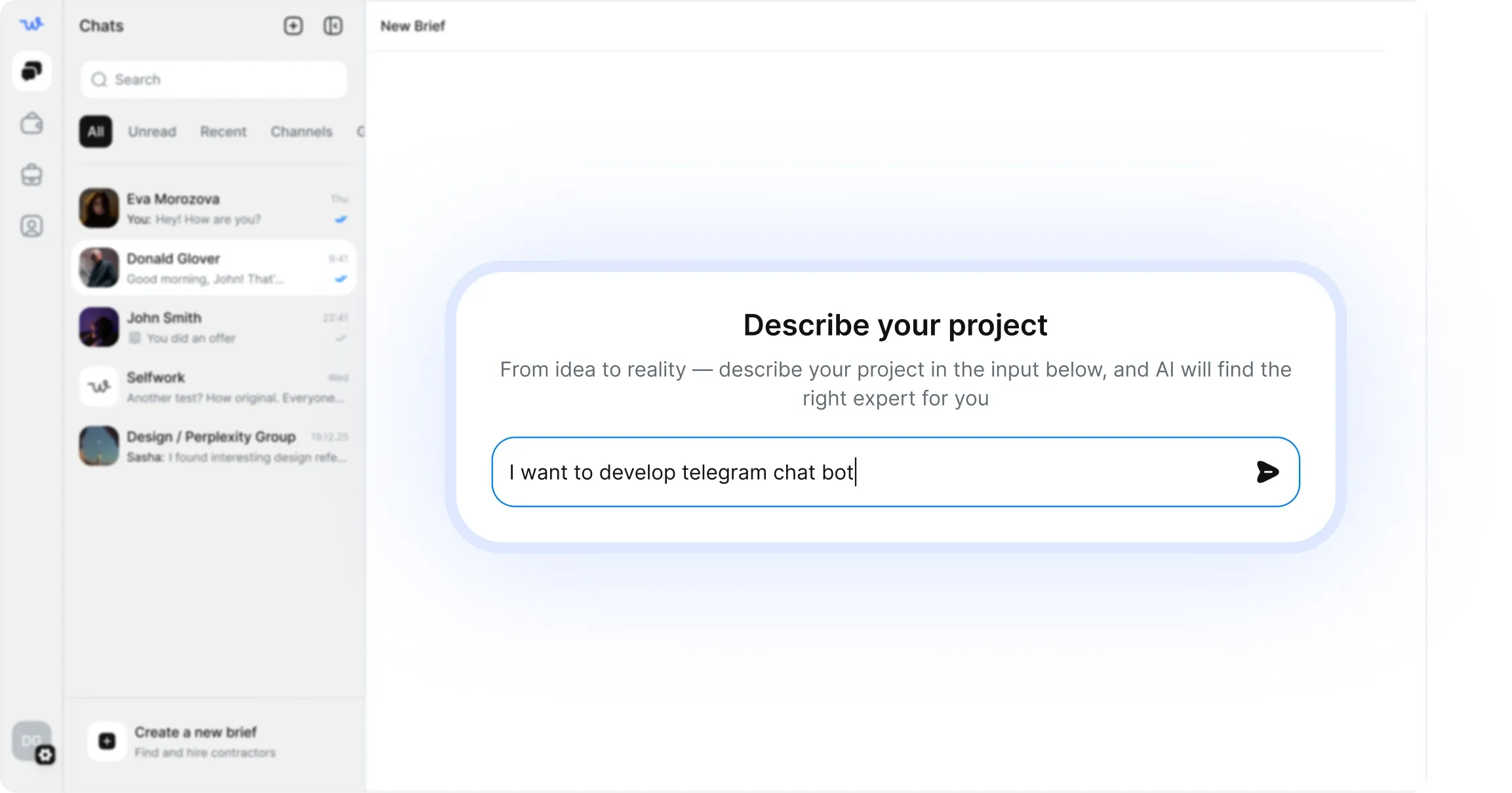
Publish a focused brief
Describe the game or app, target platforms, feature list, current status, and what success looks like. Add screenshots, build links, and technical notes if available.
Review verified specialists
Compare freelance Unity developers by portfolio, pricing, response speed, platform experience, and relevant work history. Look for examples that match your genre or device target.
Start with a scoped milestone
Use a short first task to validate communication, code quality, and delivery speed. Great starting milestones include a mechanic prototype, a bug fix, or a performance pass.
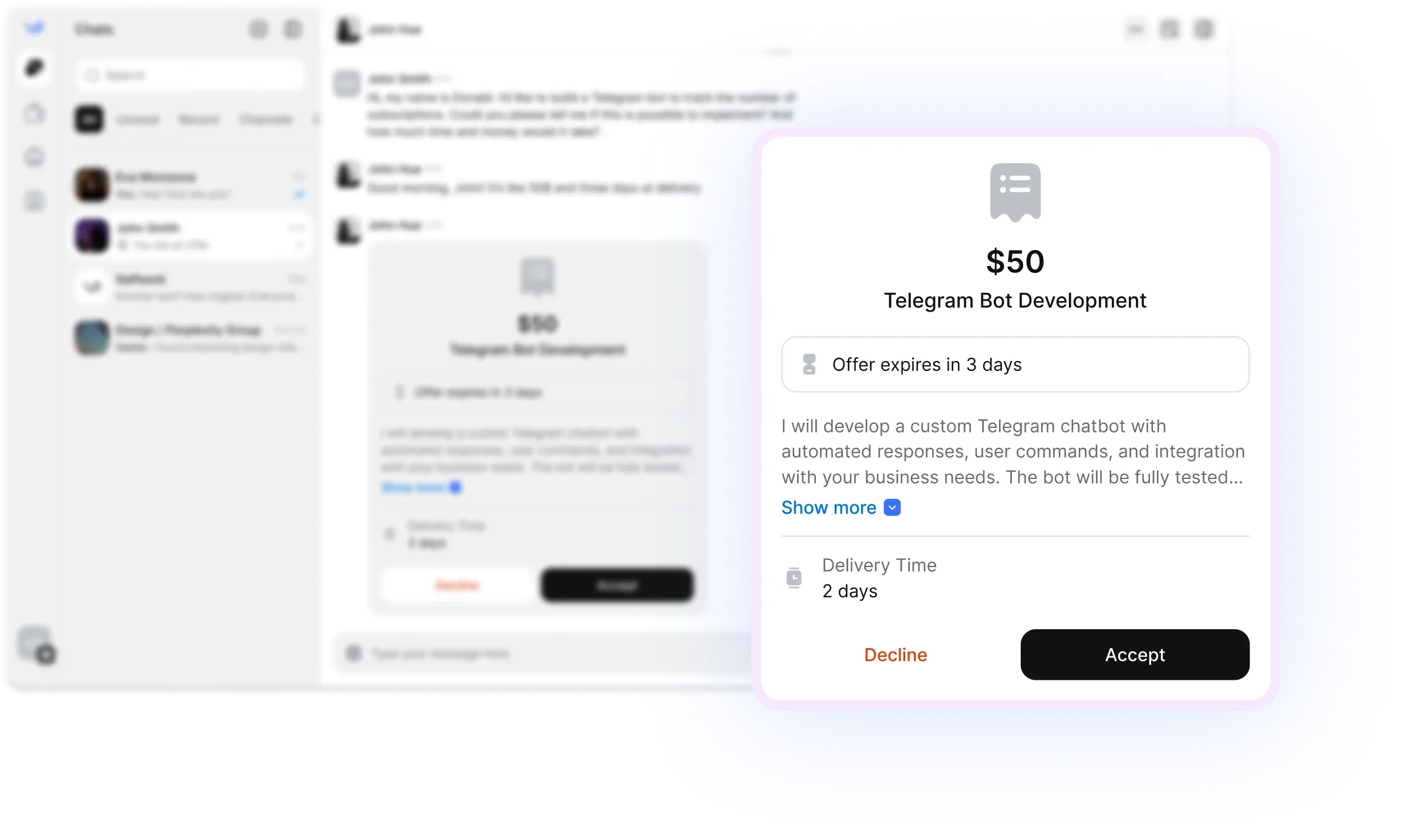
Release payment through escrow
Keep funds protected while work is in progress and release them when the milestone is accepted. This reduces risk and keeps both sides aligned on deliverables.
Common brief mistakes to avoid
Many projects slow down because the brief is too vague. If you want to hire Unity developers efficiently, avoid these mistakes:
- No target platform listed — Android, iOS, WebGL, PC, Mac, and VR all create different technical constraints.
- No project stage defined — A greenfield prototype is not the same as a rescue job on a broken repository.
- Missing performance requirements — If your game must run at 60 FPS on mid-tier phones, say so.
- No scope boundaries — List what is included and what is explicitly out of scope.
- Unclear multiplayer needs — Networking decisions affect architecture early, not after core gameplay is done.
- No asset status — Tell the developer whether art, animations, UI, and audio are ready or still pending.
- No build pipeline details — Mention version control, CI, release channels, store submission, and test devices if relevant.
A good brief makes it easier for a remote Unity developer to estimate correctly and reduces back-and-forth before work starts.
Verification and escrow
Selfwork is designed to lower hiring risk for technical projects. Unity developers can be reviewed for profile completeness, portfolio evidence, and relevant specialization so you can focus on candidates who have the right background for your target platform.
Escrow protects both sides. You fund the milestone, the developer completes the agreed scope, and payment is released after acceptance. That makes it easier to hire Unity developers for prototypes, debug sprints, and production features without paying upfront for unfinished work.
For longer projects, escrow can be used milestone by milestone. This is especially useful when you are building a game in phases, such as core loop first, then UI, then monetization, then launch polish.
FAQ
How much does it cost to hire Unity developers?
Costs depend on platform, seniority, and scope. Prototype fixes and small gameplay tasks are usually cheaper than multiplayer, AR/VR, or optimization work.
Can I hire a remote Unity developer for a short bug-fix sprint?
Yes. Many clients use a short contract to fix crashes, restore builds, or clean up performance bottlenecks before launch.
What should I include in my Unity brief?
Include target platforms, game genre, current build status, repo access, art availability, deadline, and the exact feature or issue you want solved.
Do Unity developers handle both gameplay and deployment?
Many do, but not all. If you need store submission, platform-specific builds, or CI/CD support, mention that in the brief.
Can I hire Unity developers for AR or VR work specifically?
Yes. Look for experience with XR, device input, spatial UI, and the target hardware such as Quest, iOS AR, or Android ARCore.