Pricing for Python freelancers
Python freelancer pricing depends on the type of work, urgency, and whether you need product development, automation, or data engineering. Backend builds with testing and deployment usually cost more than one-off scripts, while complex integrations or performance-sensitive systems can command premium rates.
| Project type |
Typical budget range |
What it usually includes |
| Small script or automation task |
$150–$600 |
One-off scripts, file handling, data cleanup, simple API calls |
| Web app feature or backend fix |
$500–$2,000 |
Django/FastAPI/Flask endpoints, database logic, tests, bug fixes |
| API integration or internal tool |
$1,000–$4,000 |
Auth, third-party APIs, dashboards, reporting, deployment support |
| Data pipeline / ETL / scraping system |
$1,500–$6,000 |
Data ingestion, parsing, transformation, scheduling, monitoring |
| Full Python MVP or product module |
$3,000–$12,000+ |
Architecture, backend development, database design, deployment, documentation |
If you want to hire Python freelancers for ongoing work, many specialists also offer hourly or milestone-based pricing. Hourly rates are common for discovery-heavy projects, while fixed-price milestones work well for clearly scoped builds.
Formats and use cases
Different Python specialists are a fit for different problems:
- Backend Python freelancers for web apps, dashboards, auth flows, permissions, and server-side logic
- API developers for REST and GraphQL integrations, third-party services, and internal platforms
- Automation specialists for repetitive workflows, file processing, email triggers, and admin tooling
- Data-focused Python freelancers for Pandas analysis, reporting, ETL, cleaning, and transformation
- Scraping and extraction experts for structured data collection, monitoring, and enrichment tasks
- DevOps-aware Python freelancers for Dockerized apps, AWS deployment, and environment setup
Common use cases include:
- Building a Django or FastAPI backend for a startup MVP
- Fixing performance bottlenecks or refactoring legacy Python code
- Connecting Python services to PostgreSQL, SQLAlchemy, or external APIs
- Automating spreadsheets, reports, and back-office operations
- Creating scraping pipelines for lead generation or market intelligence
- Producing data models, notebooks, and reproducible analysis workflows
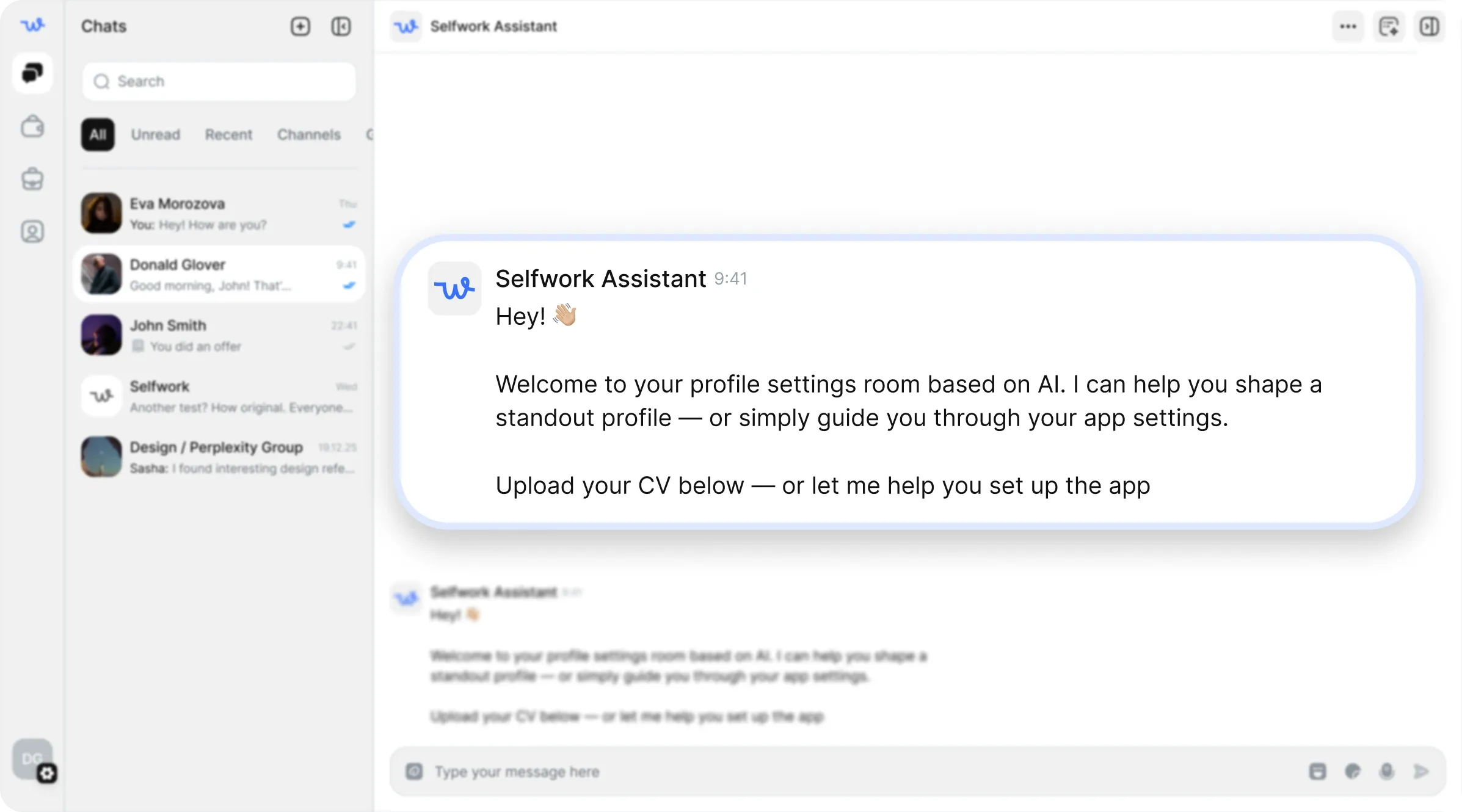
Four hiring steps on Selfwork
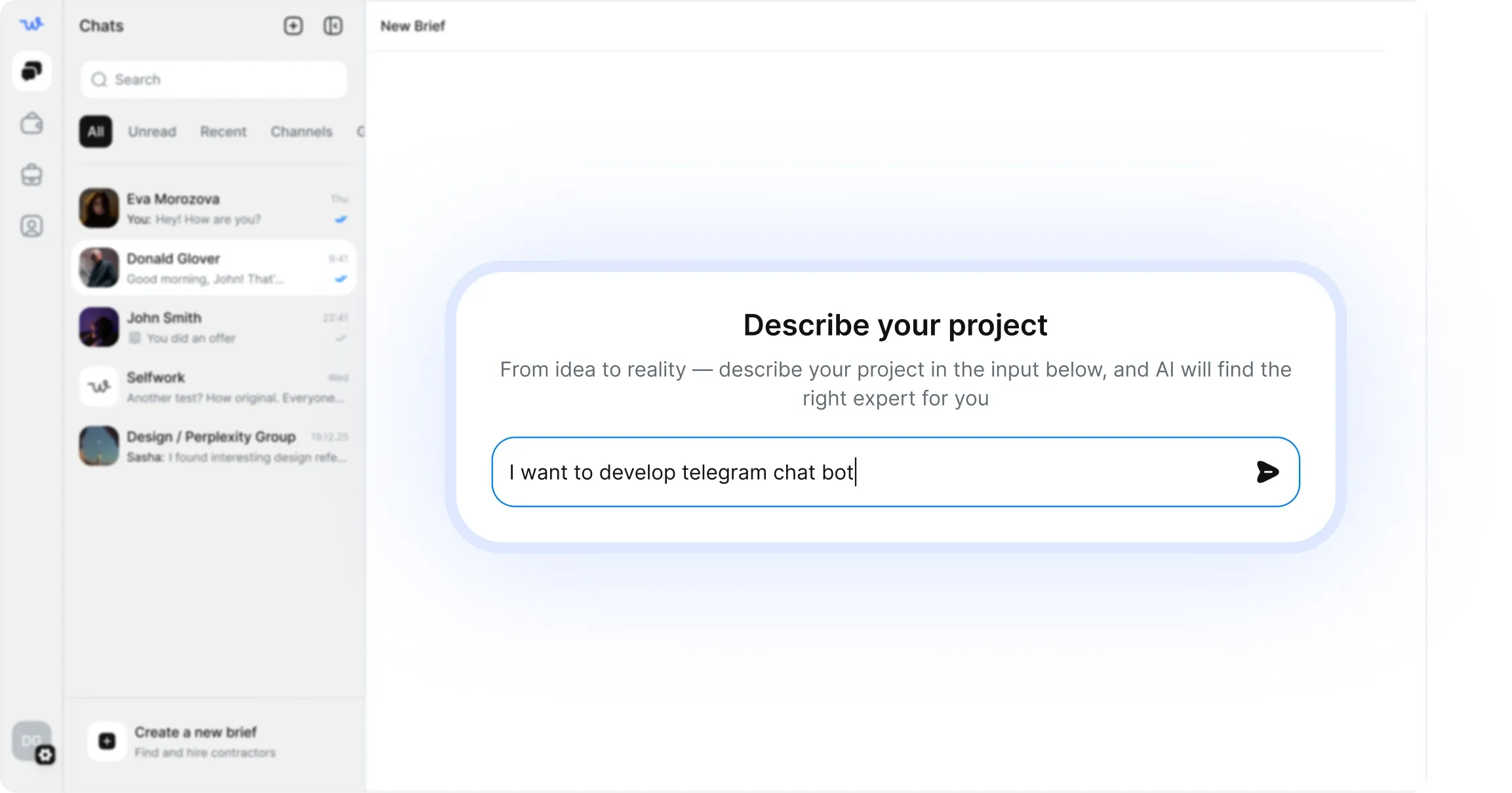
Describe the project
Share your goals, stack, deadline, and must-have outcomes. If you want to hire Python freelancers for a web app, list pages, endpoints, integrations, and deployment requirements.
Review specialists
Compare Python freelancer profiles by experience, portfolio examples, tools, and availability. Look for proof of similar work in Django, FastAPI, Flask, Pandas, NumPy, Docker, or AWS.
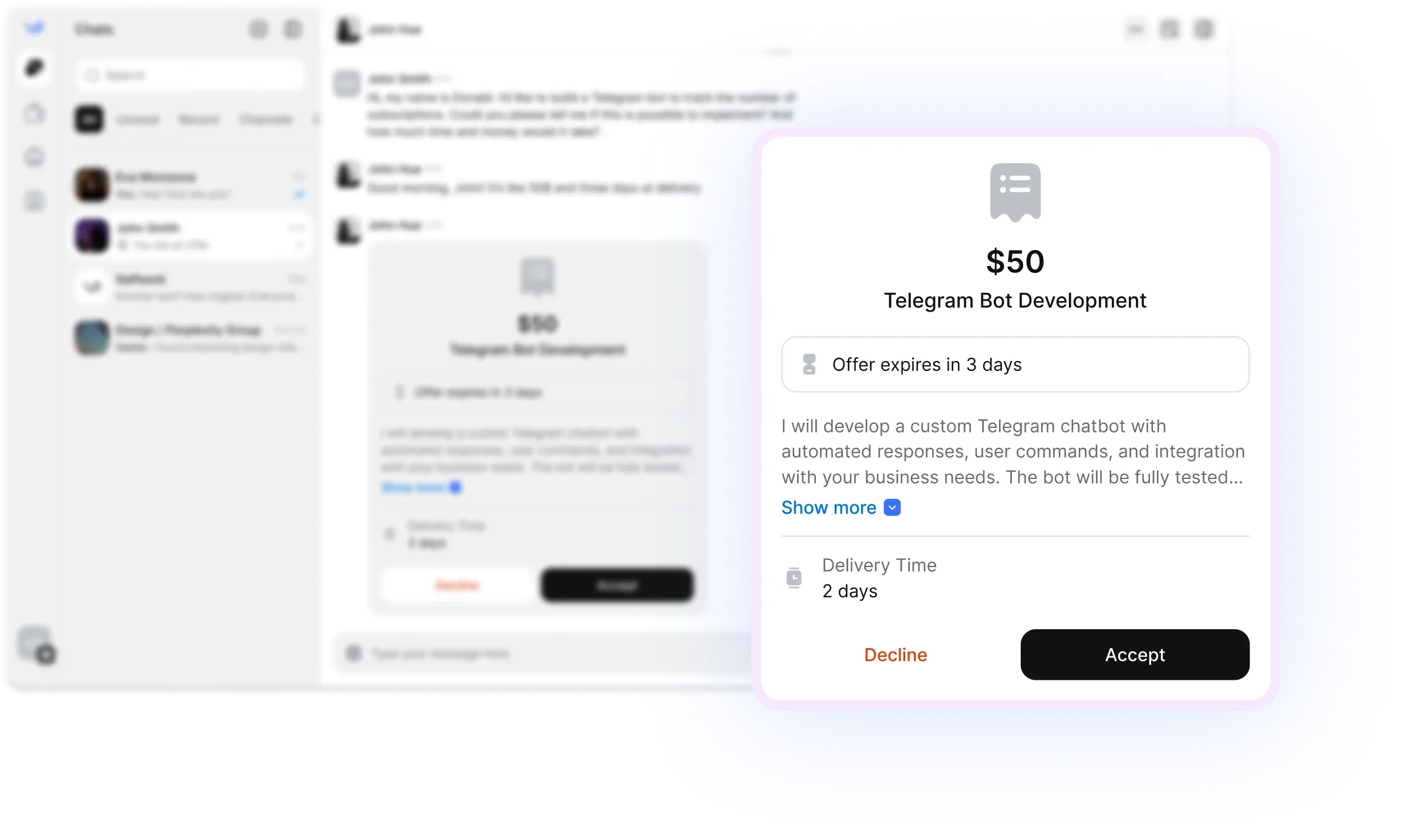
Match and agree on scope
Select the specialist who best fits your brief. Confirm deliverables, milestones, communication cadence, and any technical constraints before work begins.
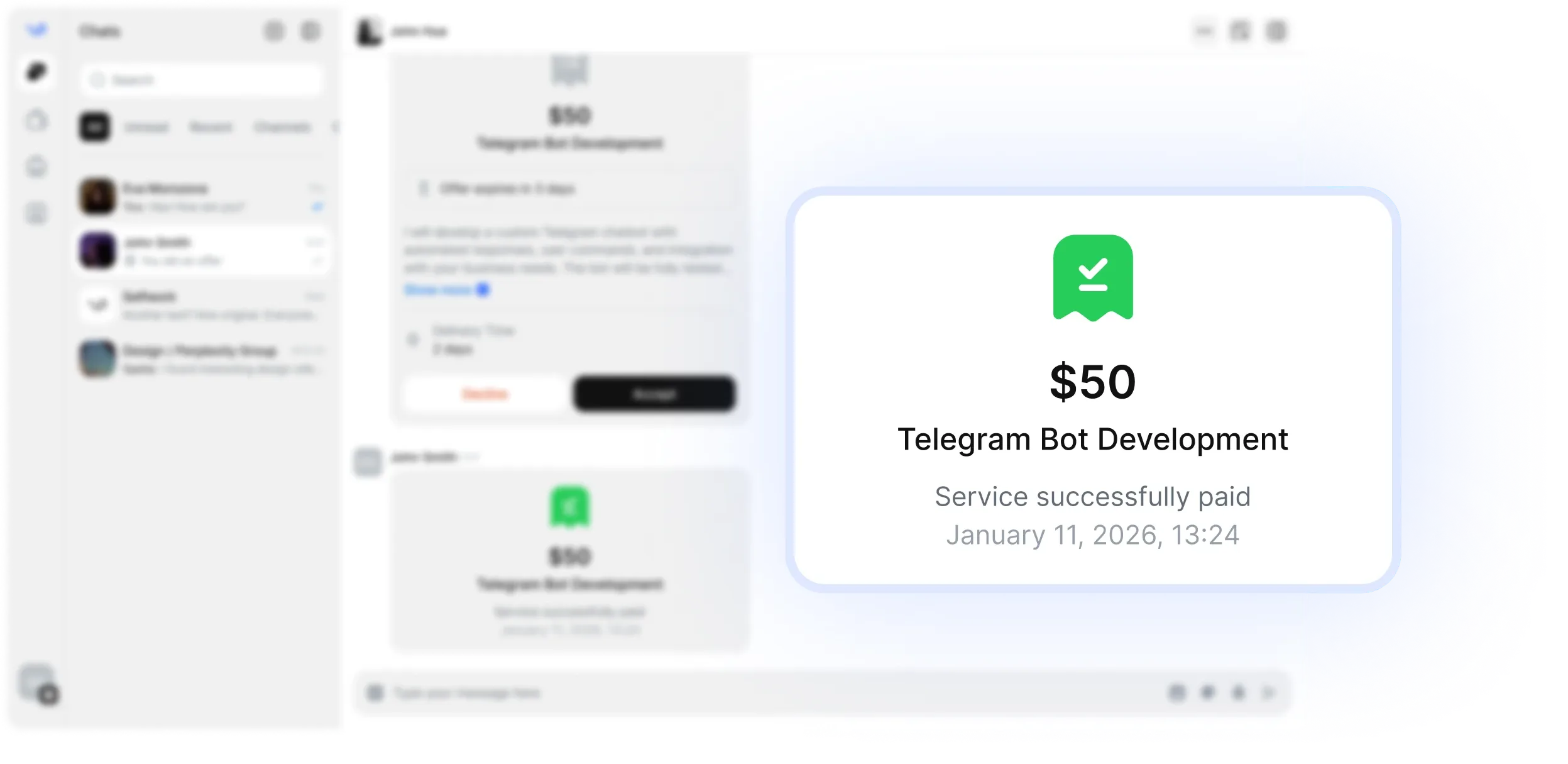
Fund securely and launch
Start with escrow-backed milestones so both sides are protected. The freelancer begins once the scope is clear and the funds are in place.
Common brief mistakes to avoid
A vague brief is the fastest way to slow down a Python project. Avoid these mistakes when you hire Python freelancers:
- No success criteria: “Build a script” is not enough. Define outputs, formats, and acceptance checks.
- Missing stack details: Mention your framework, database, hosting, and any libraries already in use.
- No input sample: For data jobs, include sample files, API responses, or schema examples.
- Undefined deployment target: Tell the freelancer whether the code will run on AWS, Docker, a VM, or serverless infrastructure.
- Hidden constraints: Surface deadlines, security rules, performance targets, and documentation needs early.
- Overloaded scope: If the project mixes backend, data, and DevOps, split it into milestones so the freelance Python specialist can price it accurately.
Good briefs help remote Python freelancers estimate faster and deliver cleaner code. They also reduce revision cycles and make it easier to compare candidates fairly.
Verification and escrow
Selfwork is designed to make it safer to hire Python freelancers online. Profiles are reviewed, work history and skill signals help you evaluate fit, and escrow protects milestone payments until deliverables are approved.
This matters especially for technical projects where progress can be hard to judge without looking at code quality, testing, documentation, and deployability. With a clear brief and escrow-backed milestones, you can move faster without taking unnecessary risk.
For longer engagements, it is smart to define review checkpoints for architecture, implementation, and final handoff. That way, your Python freelancer can adjust early if the requirements change.
FAQ
How do I hire Python freelancers for a backend project?
Start with your framework, database, endpoints, auth needs, and deployment target. Then review candidates with relevant Django, FastAPI, or Flask experience and choose the one who has built similar systems.
Can I hire a remote Python freelancer for a one-off script?
Yes. Remote Python freelancers are often a strong fit for scripts, automations, file processing, scraping, and quick integrations when the scope is clearly defined.
What should I include in a Python development brief?
Include your goal, inputs, outputs, stack, timeline, hosting environment, required libraries, and any sample data or API docs. The more concrete the brief, the easier it is to get accurate quotes.
Do Python freelancers handle both data and web work?
Many do, but it helps to choose a specialist whose portfolio matches your main objective. Some focus on backend apps and APIs, while others specialize in Pandas, ETL, scraping, and analysis.
Is escrow useful for Python projects?
Yes. Escrow is especially useful when you are hiring for technical work with milestones, because it keeps payment aligned with agreed deliverables and reduces risk for both sides.