Pricing
Node.js freelancer pricing depends on scope, seniority, architecture complexity, and whether the job is a one-off fix or an ongoing backend engagement. Simple API updates cost less than multi-service system design, performance tuning, or migrations from legacy code.
| Engagement type |
Typical scope |
Common pricing model |
| Small fix or bug hunt |
Endpoint errors, package issues, basic refactor, broken webhook |
Fixed price |
| Feature sprint |
New API routes, auth flow, admin tools, background jobs, integration work |
Fixed price or hourly |
| MVP backend build |
Express or NestJS app, database schema, auth, deployment setup |
Milestone-based |
| Complex systems work |
Microservices, realtime features, queues, caching, scaling, observability |
Milestone-based or hourly |
| Ongoing support |
Monitoring, bug fixes, performance improvements, release support |
Retainer or hourly |
If you want to hire Node.js freelancers efficiently, budget for discovery time when the codebase is messy, documentation is light, or the deployment environment is unclear. Experienced freelance Node.js specialists usually price higher when they are expected to own architecture decisions, production reliability, and handover quality.
Formats and use-cases
Node.js freelancers can support a wide range of delivery formats, from a short audit to a long-term backend partnership.
- API development: Build or extend REST and GraphQL APIs for apps, dashboards, marketplaces, and internal tools.
- MVP backend: Stand up an initial backend with authentication, data models, validation, and deployment.
- Realtime features: Add chat, notifications, live updates, presence, websocket streams, and event-driven workflows.
- Integration work: Connect CRMs, payment providers, email tools, analytics platforms, and webhook-based services.
- Performance work: Improve response times, optimize database queries, add caching, and reduce server load.
- Migration work: Move from callbacks to async/await, JavaScript to TypeScript, monolith to services, or one database to another.
- Maintenance and support: Patch bugs, update dependencies, monitor errors, and stabilize production releases.
Remote Node.js freelancers are especially useful when you need a specialist who can drop into an existing team and start shipping without requiring a full-time hire.
Four hiring steps on Selfwork
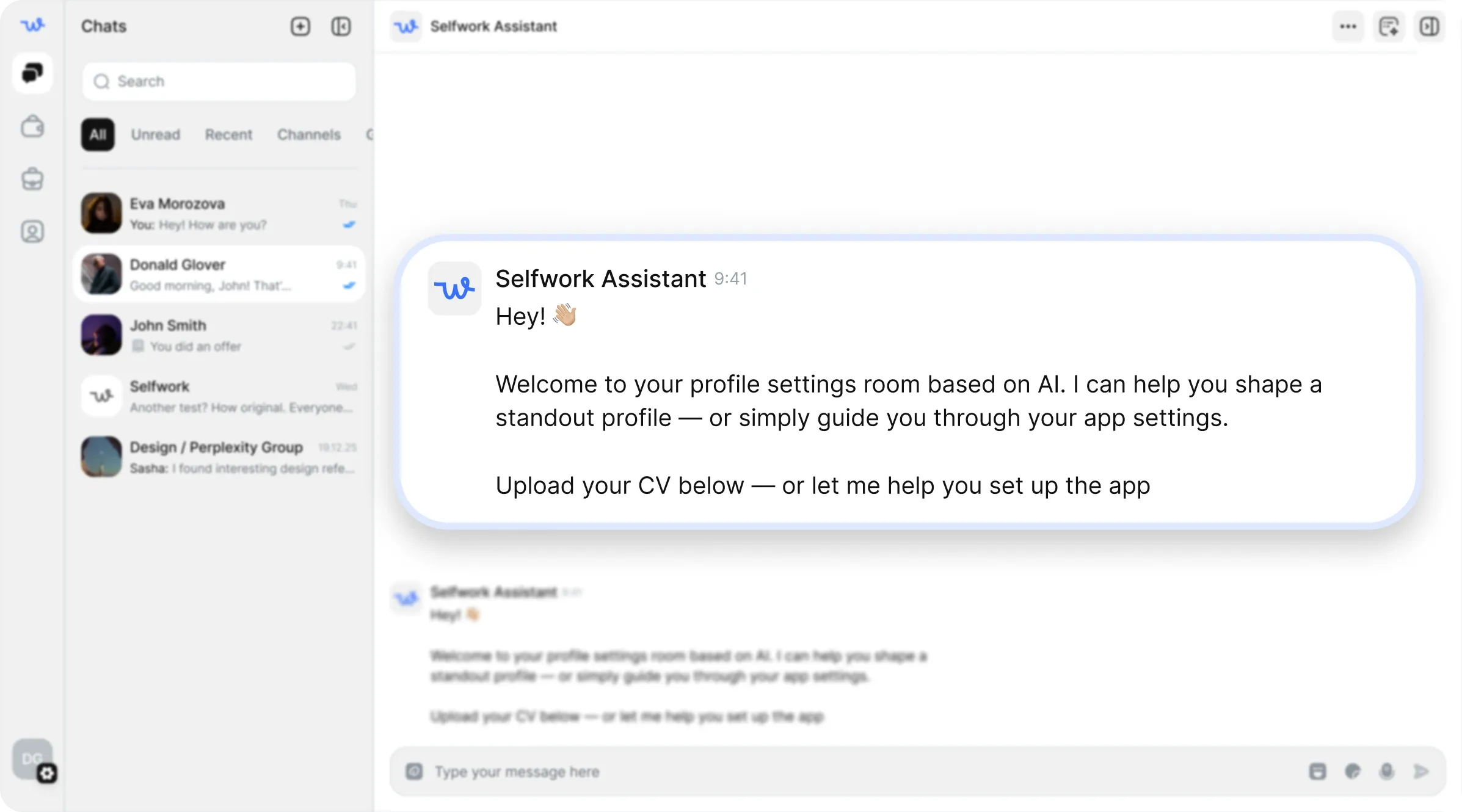
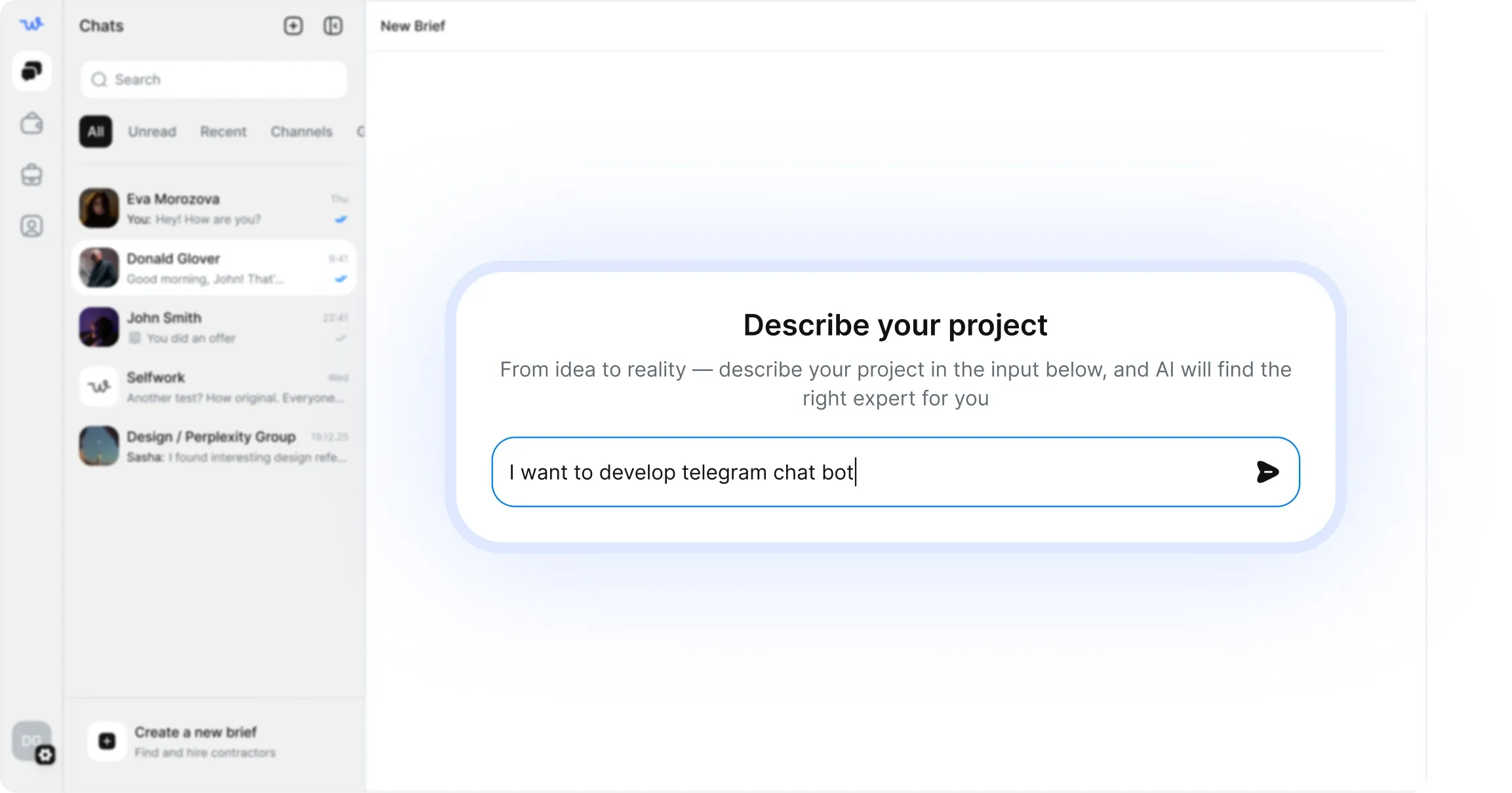
Describe the backend problem
Share the product goal, current stack, deadlines, and what success looks like. Mention whether you need a new build, a fix, or support for an existing system.
Review matched Node.js freelancers
Compare work samples, technical focus, response speed, and fit with your stack. Look for clear evidence of similar Node.js projects, not just general JavaScript experience.
Confirm scope and delivery plan
Align on tasks, milestones, expected handover, and communication cadence. A strong brief reduces surprises and makes the estimate more reliable.
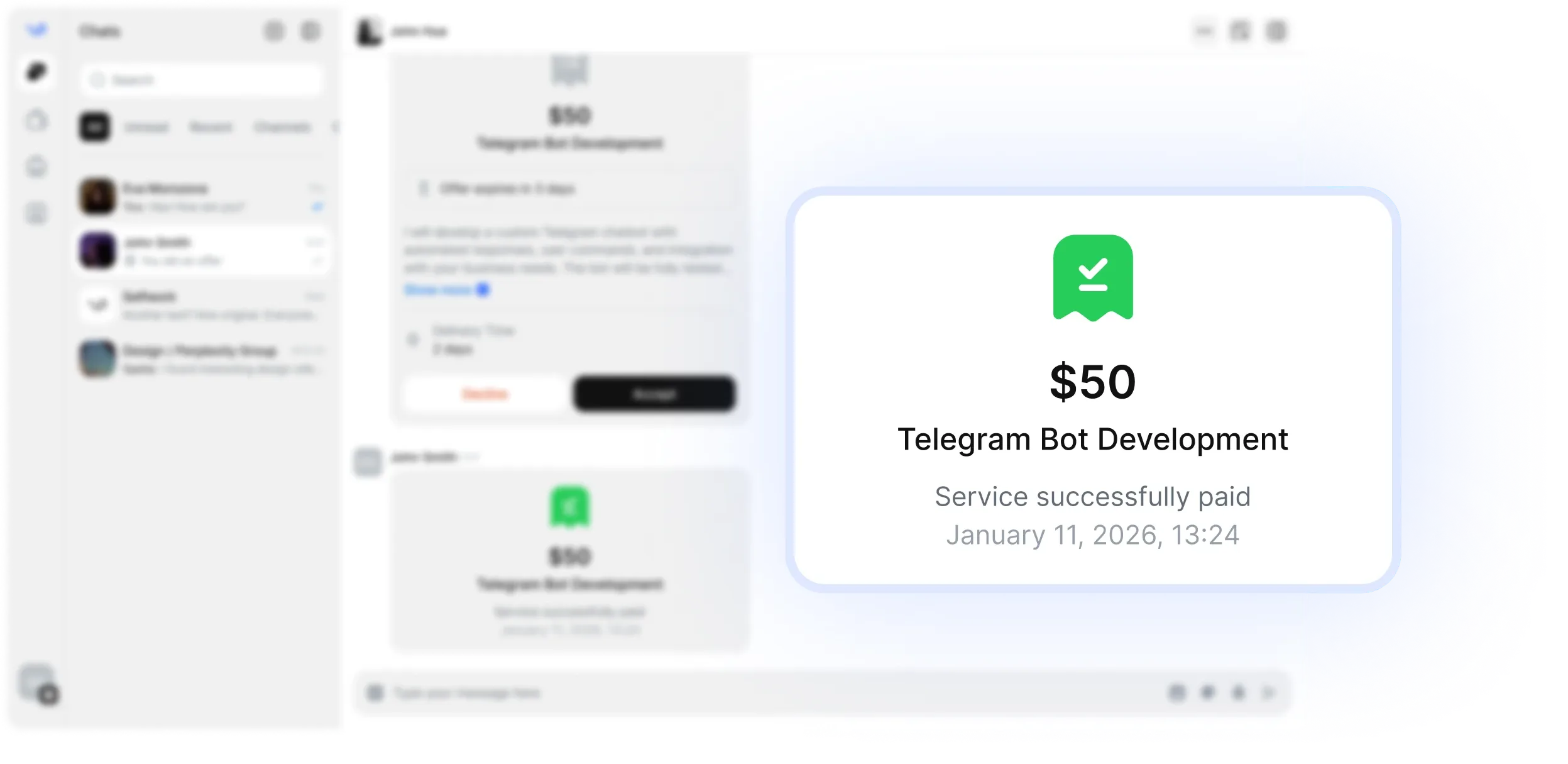
Fund securely and start work
Use escrow to protect the engagement, then kick off with a clear checklist. Keep feedback tight so the freelancer can move quickly and adjust early if needed.
Common brief mistakes
The fastest way to slow down hiring is to write a vague brief. Avoid these mistakes when you hire Node.js freelancers:
- Saying “need backend help” without details. Specify endpoints, data flows, and the business outcome.
- Skipping the current stack. Mention Node.js version, framework, database, hosting, and any existing services.
- Ignoring non-functional requirements. Include latency targets, logging, security, test coverage, and uptime expectations.
- Leaving out integrations. List every external API, payment gateway, email platform, queue, or webhook source.
- Not defining ownership. State whether the freelancer is implementing only, or also handling architecture, deployment, and handover.
A clear brief helps freelance Node.js specialists estimate accurately and prevents scope drift later.
Verification and escrow
Selfwork is built to reduce hiring risk when you work with remote Node.js freelancers. Verification helps you compare profiles with more confidence, while escrow supports safer payment flow as the project progresses. That matters when a brief includes business-critical APIs, customer data, or live production systems.
For Node.js work, escrow is especially useful because backend tasks often span multiple milestones: discovery, implementation, QA, deployment, and post-launch fixes. Instead of paying everything up front, you can release funds as each stage is completed and reviewed. This keeps delivery accountable while giving the freelancer a clear path to get paid for completed work.
FAQ
How do I hire Node.js freelancers for an API project?
Start with the endpoints, auth requirements, database, and deployment target. Share examples of the request and response payloads you need, then shortlist freelancers with similar API work.
Can I hire remote Node.js freelancers for ongoing backend maintenance?
Yes. Many clients use remote Node.js freelancers for bug fixes, dependency updates, monitoring, and small feature releases on a weekly or monthly basis.
Should I choose Express or NestJS freelancers?
Choose based on project structure and team preference. Express is often lighter and faster for simple services, while NestJS suits larger codebases, modular architecture, and TypeScript-first teams.
What should I include in a Node.js brief?
Add the current stack, business goal, existing repos, database choice, deployment environment, integrations, deadlines, and any security or performance constraints.
Can Node.js freelancers help with TypeScript and Docker?
Yes. Many freelance Node.js specialists work with TypeScript, Docker, and AWS as part of modern backend delivery, especially for production-ready services and cloud deployments.