Hiring a database specialist is often a high-leverage decision. Small changes to schema design, indexing, query structure, or replication settings can unlock immediate gains in speed, cost, and reliability. If you want to hire Database Engineers confidently, focus on three things: proof of relevant production work, a brief that defines the operational problem, and a hiring flow that protects both sides while the work is in progress.
Pricing
Database engineer pricing depends on scope, risk, and urgency. A short query review is very different from a multi-week migration or a mission-critical production incident.
| Engagement type |
Typical use case |
Typical price range |
| Diagnostic review |
Slow queries, index review, schema feedback, capacity checks |
$150–$500 |
| Part-time freelance support |
Ongoing database maintenance, monitoring, and optimization |
$50–$150/hr |
| Migration project |
PostgreSQL/MySQL/MongoDB moves, data validation, cutover planning |
$1,500–$10,000+ |
| Production rescue |
Outages, replication issues, corruption recovery, emergency tuning |
$300–$1,000+ per day |
| Senior architecture work |
Data modeling, sharding, multi-region planning, analytics design |
$75–$200/hr |
For most teams, the best value comes from a freelance Database Engineer who can do both strategic design and hands-on fixes. If your system is growing fast, paying for stronger architecture early is usually cheaper than repeatedly patching slow or unstable queries later.
Formats and use cases
Different projects need different hiring formats.
- Fixed-scope audits: Best for query tuning, schema review, indexing improvements, and capacity planning.
- Migration projects: Best for moving between database engines, upgrading major versions, or replatforming to managed cloud databases.
- Retainer support: Best for teams that need ongoing monitoring, incident response, and periodic performance improvements.
- Embedded remote support: Best when a database engineer works alongside backend or data teams to improve reliability over several sprints.
- Emergency response: Best for outages, lock contention, replication lag, disk pressure, or data corruption investigations.
Common tasks include:
- SQL query optimization and EXPLAIN plan analysis
- Index design and maintenance
- Database schema design and normalization/denormalization decisions
- Backup, restore, and disaster recovery planning
- Replication, clustering, and failover setup
- Database version upgrades and rollback planning
- MongoDB document modeling and scaling
- Redis caching strategy and memory optimization
- Elasticsearch indexing, search relevance, and query tuning
- ETL, dbt, and Airflow pipeline support
How to hire Database Engineers on Selfwork in 4 steps
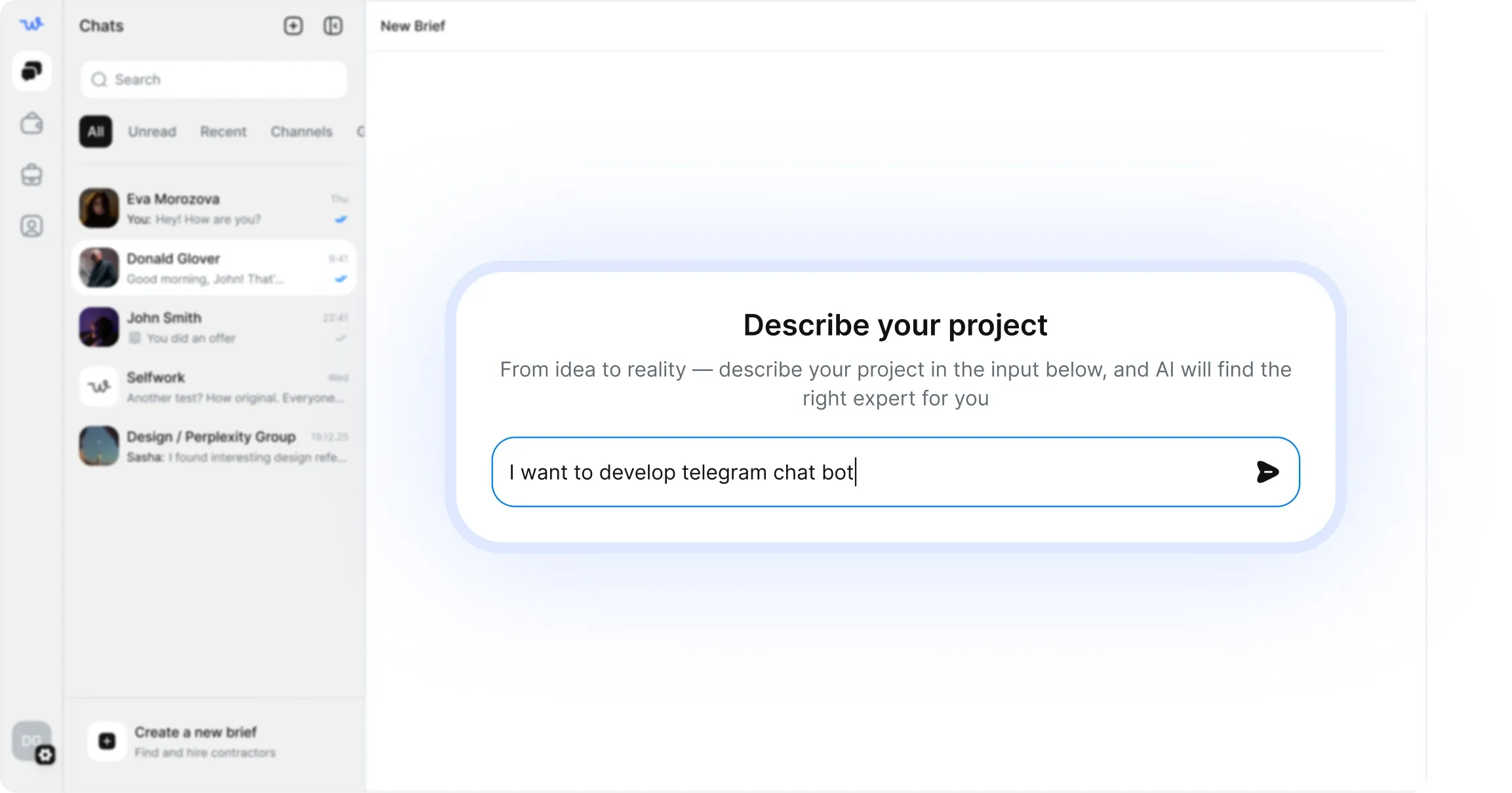
Write the problem, not just the title
Tell specialists what is happening: slow writes, long locks, failed backups, rising cloud costs, or a migration deadline. Include your stack, data volume, traffic level, and the business impact.
Review verified specialists
Compare database engineers with relevant production experience in PostgreSQL, MySQL, MongoDB, Redis, Elasticsearch, SQL Server, cloud-managed databases, and analytics tooling. Look for evidence of similar work, not just broad claims.
Shortlist by fit and communication
The best database engineer is often the one who asks the right questions quickly: version details, replication topology, workload patterns, downtime tolerance, backup frequency, and validation steps.
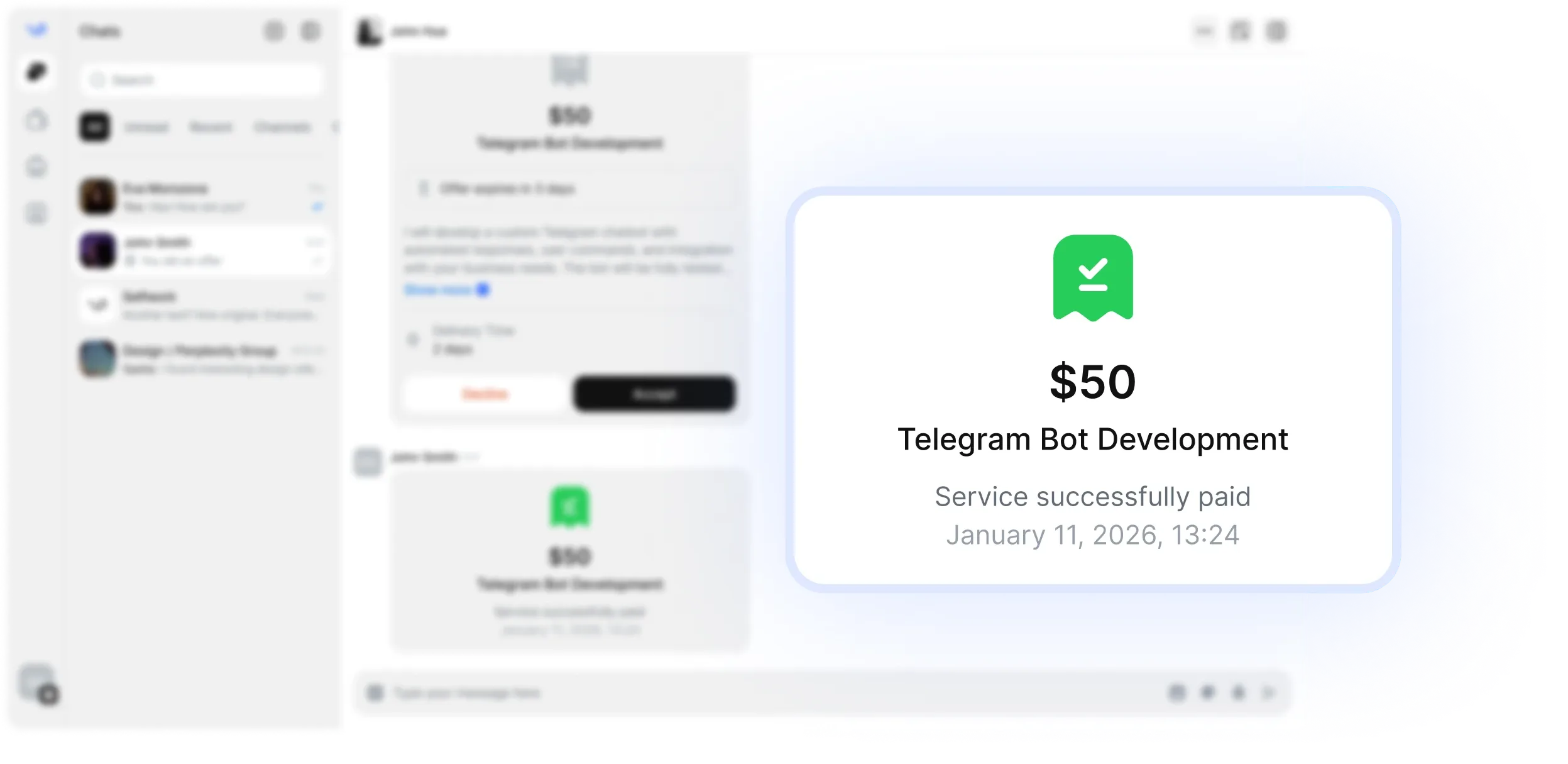
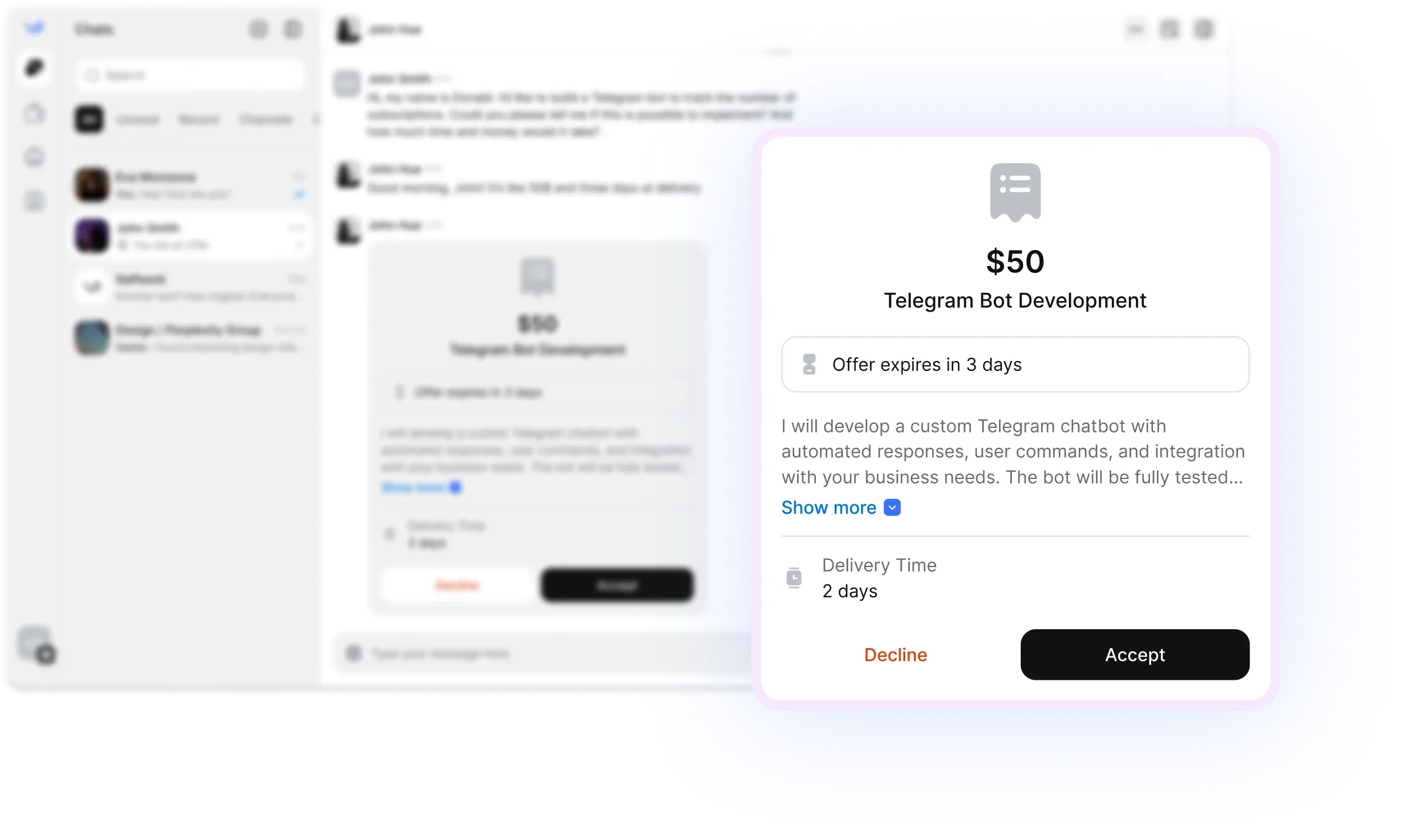
Start with escrow and milestones
Use staged delivery for audits, migrations, and optimization work. Define acceptance criteria such as query latency improvement, successful restore tests, migration validation, or reduced error rates.
Common brief mistakes
A weak brief slows down matching and leads to mismatched proposals. Avoid these common mistakes when you hire Database Engineers:
- Saying “need database help” without specifics: Mention the engine, version, workload, and exact issue.
- Not listing data size and traffic: A 10 GB app database and a 10 TB analytical store require very different skills.
- Ignoring downtime tolerance: Engineers need to know whether zero-downtime is required or whether a maintenance window is acceptable.
- Forgetting validation requirements: Define how success will be measured: compare counts, checksum validation, performance benchmarks, or restore tests.
- Omitting surrounding systems: Backend framework, caching layer, search engine, ETL jobs, and analytics stack all affect the work.
- Choosing only on rate: The cheapest option can be expensive if the database engineer has to redo the work after an outage or failed migration.
A strong brief for a freelance Database Engineer should include current pain points, desired outcomes, constraints, and the platforms involved. If you have logs, query samples, diagrams, or migration plans, share them early.
Verification and escrow
Selfwork is built to reduce hiring risk for technical work. Verified profiles help you compare real experience, while escrow protects both sides during delivery. That matters especially for database projects, where the cost of a mistake can be downtime, lost data, or delayed releases.
Verification helps you evaluate whether a database engineer has handled the type of work you need — not just whether they can describe it. Escrow gives you a safer way to fund milestones for audits, migrations, optimization passes, and production fixes. For larger projects, staged release is often the smartest approach: discovery first, implementation second, validation last.
If you are hiring for a production-critical system, ask for evidence of backup/restore procedures, rollback planning, and post-change validation. A strong remote Database Engineer should be comfortable explaining the plan in plain language, documenting risks, and working with your developers or DevOps team.
FAQ
What should I include when I hire Database Engineers?
Include the database engine and version, data size, traffic levels, main performance issue, timeline, acceptable downtime, and any tools in use such as dbt, Airflow, Redis, or Elasticsearch.
Can a freelance Database Engineer handle both optimization and migration?
Yes. Many specialists handle query tuning, schema redesign, and migration planning together, especially for PostgreSQL, MySQL, and MongoDB projects.
How do I know if I need a senior database engineer?
If your project involves replication, sharding, multi-region design, emergency recovery, or a high-risk migration, a senior specialist is usually the safer choice.
Is remote database work effective?
Yes, as long as the brief is clear and the engineer has access to logs, metrics, diagrams, and test environments. Remote Database Engineers are often ideal for audits, fixes, and migration planning.
What platforms do Database Engineers on Selfwork usually support?
Common platforms include PostgreSQL, MySQL, MongoDB, Redis, Elasticsearch, SQL Server, cloud-managed databases, and analytics pipelines built around dbt and Airflow.