Pricing for blockchain developers
Blockchain development rates vary widely based on protocol experience, security responsibility, and whether the work involves production smart contracts or product UI integration. Use the table below as a practical starting point.
| Engagement type |
Typical scope |
Common pricing model |
Typical rate range |
| Prototype / spike |
Feasibility checks, contract drafts, wallet flow experiments |
Fixed price or hourly |
$40–$90/hr |
| MVP build |
Smart contracts, dApp front end, testnet deployment |
Fixed milestone |
$3,000–$15,000 |
| Production launch |
Audited contracts, backend integration, mainnet deployment |
Milestone + escrow |
$8,000–$40,000+ |
| Ongoing maintenance |
Bug fixes, upgrades, monitoring, new features |
Retainer or hourly |
$50–$150/hr |
| Security-sensitive work |
Token contracts, DeFi logic, governance, bridges |
Specialist hourly or audit-aligned milestone |
$80–$200/hr |
Factors that move the price up: multi-chain support, complex token economics, high-volume transaction logic, custom signature schemes, gas optimization, upgradeable architectures, and security review coordination.
Formats and use cases
You can hire blockchain developers for several common engagement types:
- Smart contract implementation: ERC-20, ERC-721, ERC-1155, vesting contracts, staking, DAO voting, marketplaces, and escrow flows.
- dApp development: Wallet login, transaction signing, transaction status handling, user dashboards, and on-chain data views.
- DeFi product work: Liquidity pools, swaps, yield features, vaults, farming logic, and protocol UI.
- NFT launches: Mint pages, allowlists, metadata handling, reveal mechanics, and admin tooling.
- Cross-chain and L2 projects: Bridge-adjacent UX, chain switching, and deployment across Ethereum, Polygon, Arbitrum, Base, Optimism, or Solana.
- Backend and infrastructure: Indexers, event listeners, APIs, queue workers, monitoring, and data pipelines.
- Security and refactoring: Testing, gas optimization, code reviews, upgrade planning, and production hardening.
If you need a remote blockchain developer, be explicit about time zone overlap, communication cadence, and whether the work is isolated to contracts or includes full-stack delivery.
Four steps to hire on Selfwork
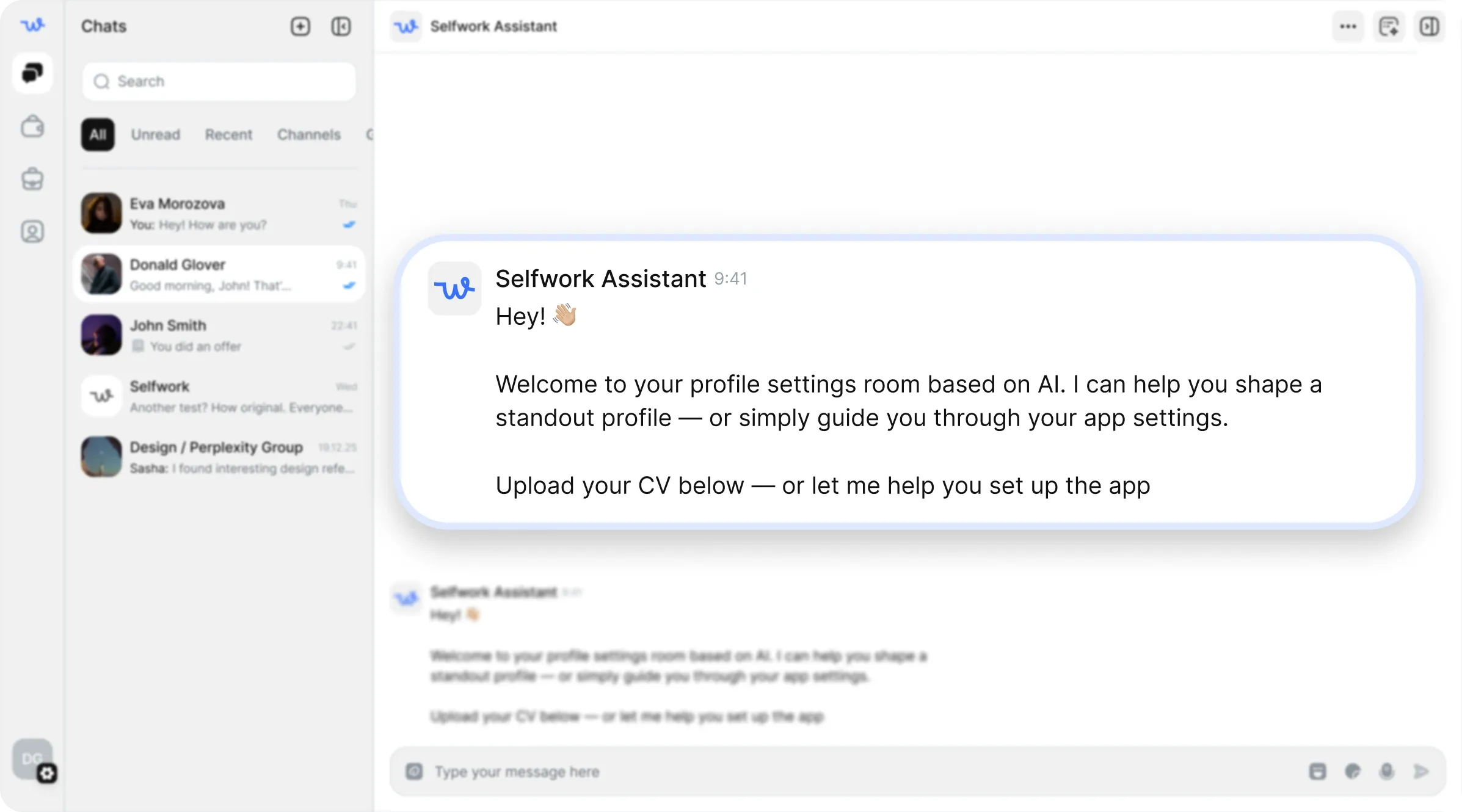
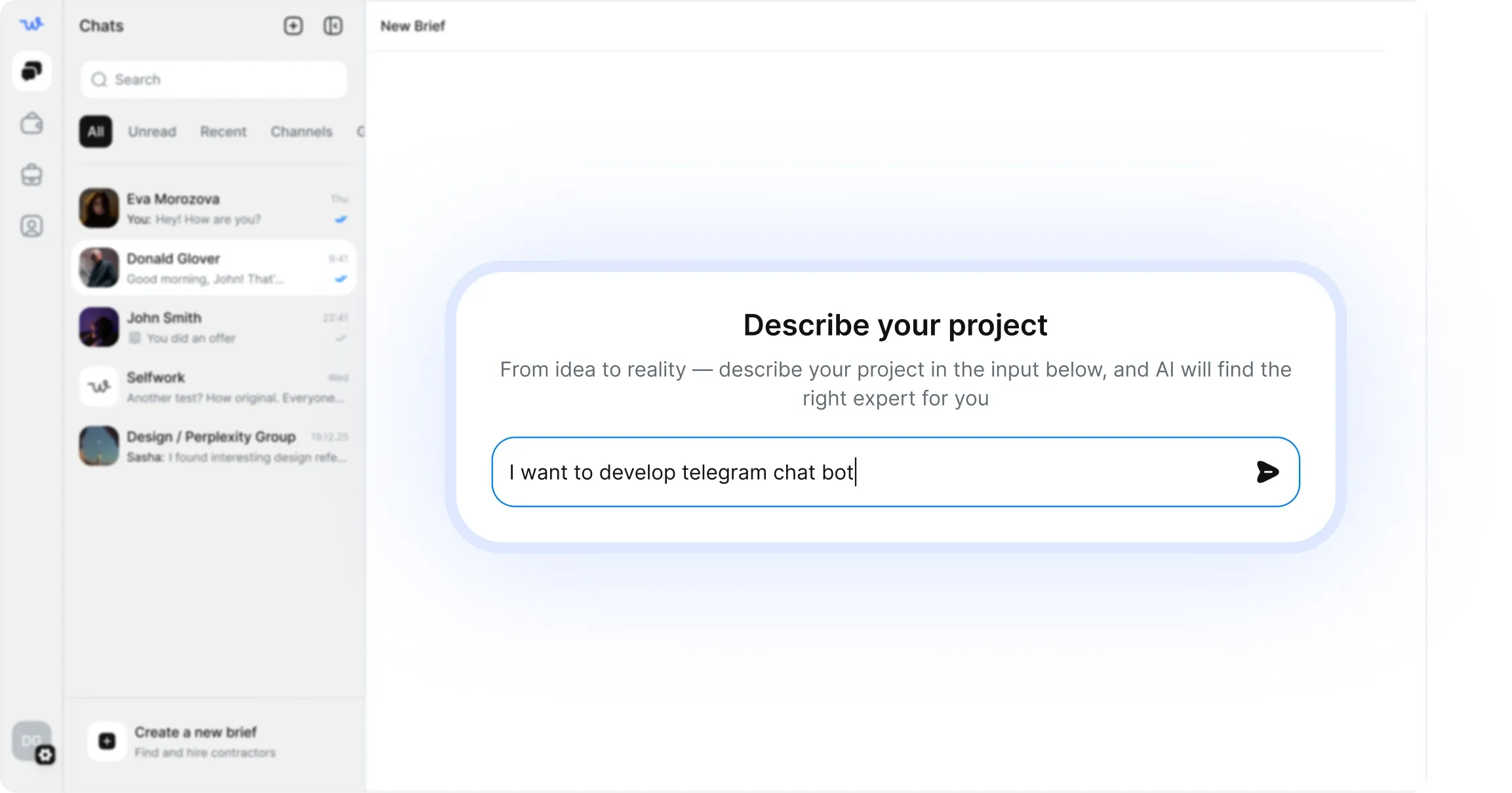
Publish a clear brief
Describe the product, target chain, user flow, contract responsibilities, deadline, and any security requirements. Mention your expected deliverables, not just your idea.
Review relevant specialists
Compare freelance blockchain developers by stack, chain experience, past deployments, and product fit. Look for evidence of shipped work, not just buzzwords.
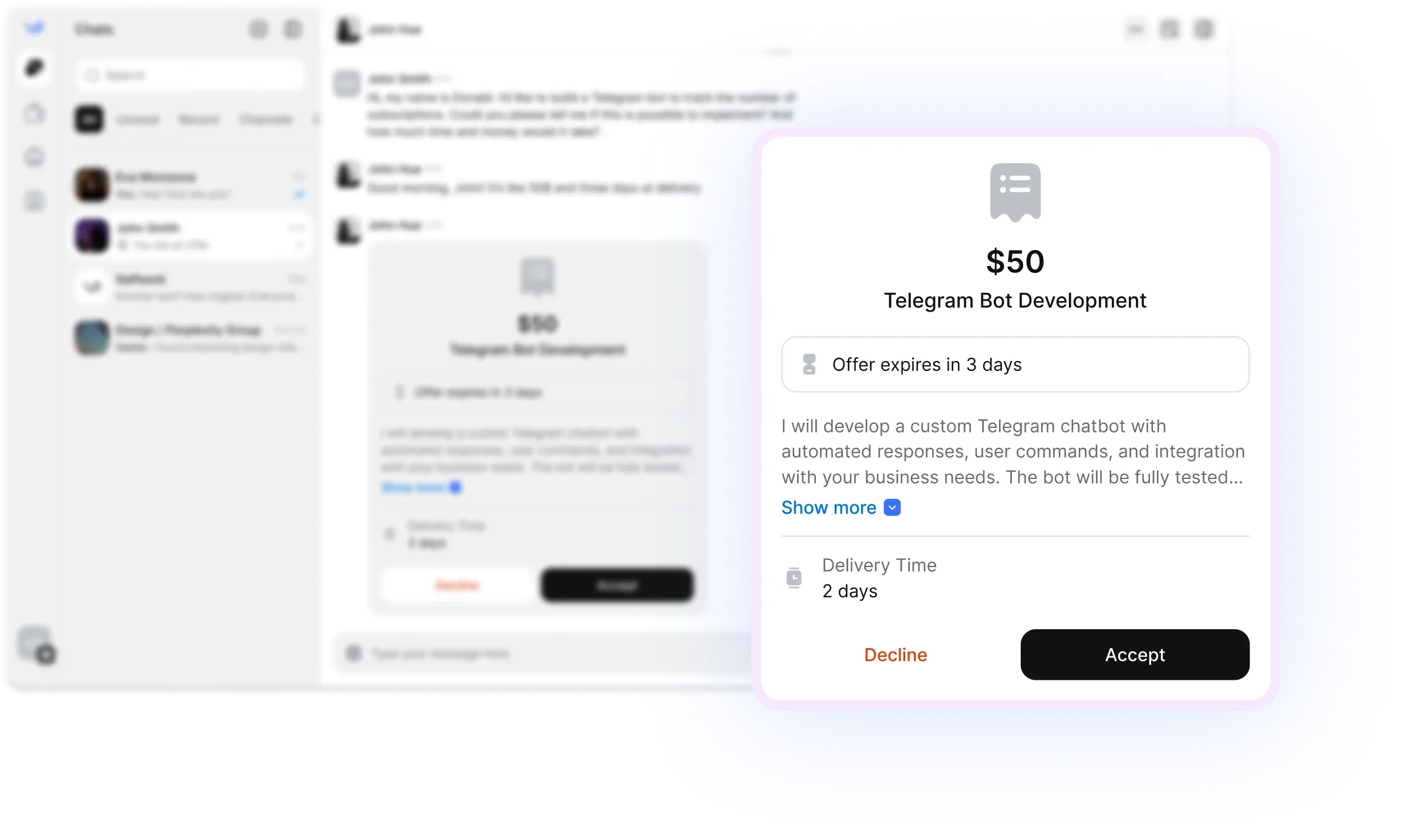
Start with a scoped milestone
Agree on a first deliverable: architecture review, contract draft, testnet build, wallet flow, or deployment plan. A tight milestone reduces risk and improves speed.
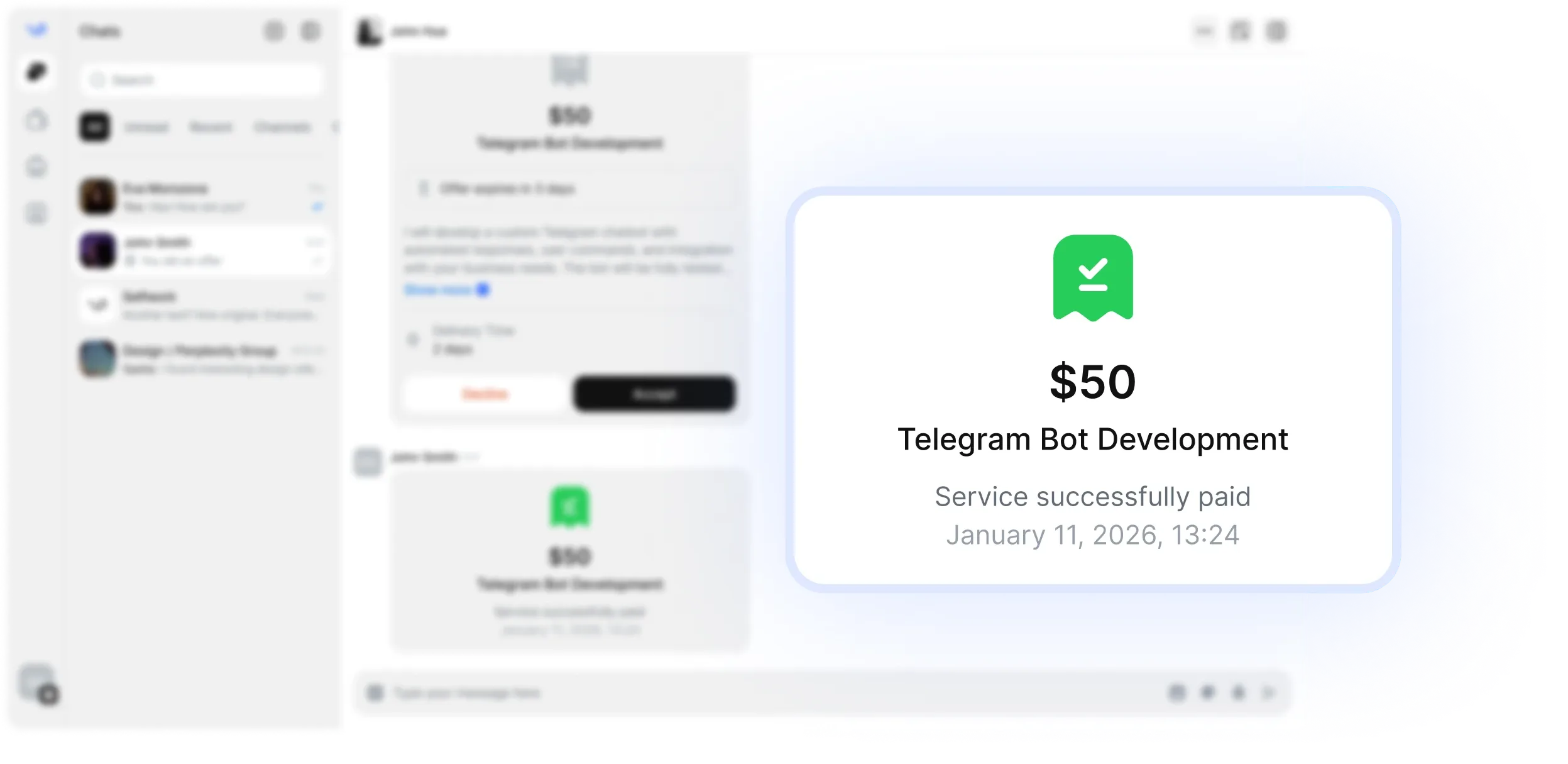
Use escrow and release by acceptance
Fund the work securely, then release payment when the milestone is delivered and verified against your brief.
Common brief mistakes to avoid
A vague brief is the biggest reason blockchain projects run late or become expensive. Avoid these mistakes:
- Not naming the chain: EVM and Solana builds require different skills, tooling, and assumptions.
- Skipping security expectations: Say whether you need basic testing, formal review support, or a full audit path.
- Undefined token logic: Token supply, vesting, permissions, mint rules, and admin controls should be written down.
- Missing integration details: If the contract must connect to a frontend, backend, or indexer, say so early.
- No acceptance criteria: Define what “done” means, including test coverage, deployment, and documentation.
- Too much scope in one milestone: Split large jobs into architecture, build, test, and launch phases.
Verification and escrow
Selfwork is designed to reduce the biggest risks in hiring blockchain developers: unclear capability, weak accountability, and payment risk.
- Verification helps you focus on specialists with credible profiles, relevant experience, and real project history.
- Escrow protects both sides by holding funds until the agreed milestone is delivered.
- Brief-led matching keeps the conversation focused on your actual technical requirements, whether you need Solidity smart contracts, Rust on Solana, Ethers.js integration, or a remote blockchain developer for ongoing support.
For blockchain work, this matters because the cost of a bad handoff can be high: failed deployments, broken token logic, unnecessary gas costs, and security exposure. A structured hiring flow makes it easier to hire blockchain developers with confidence.
FAQ
How do I hire blockchain developers for a smart contract project?
Start with the contract type, target chain, and required tooling. Include whether the work needs testing, deployment, and security review. Then shortlist specialists with proven Solidity, Rust, or EVM experience.
Can I hire a freelance blockchain developer for a small MVP?
Yes. Many freelance blockchain developers take on focused MVPs such as mint pages, staking dashboards, token launch workflows, or wallet-connected product prototypes.
What should I include in a blockchain developer brief?
List the chain, contract standards, user flows, integrations, deadline, security needs, and delivery format. The more concrete your acceptance criteria, the easier it is to match the right remote blockchain developer.
Do blockchain developers handle both contracts and frontend work?
Some do. If you need both, look for full-stack Web3 experience with Solidity or Rust plus React, Next.js, Ethers.js, or Web3.js.
Is escrow important for blockchain projects?
Yes. Escrow is especially useful for blockchain development because contract work is milestone-driven and needs clear acceptance before funds are released.