Pricing
Backend engineering rates vary by complexity, seniority, and the risk profile of the system. A simple API integration costs far less than a payment platform, a distributed event pipeline, or a migration that must stay online during release.
| Engagement type |
Typical scope |
Estimated price range |
| Small backend task |
Fixing an endpoint, adding validation, small bug fix, minor integration |
$300–$1,200 |
| Feature build |
New API route, auth flow, notification service, background job, database change |
$1,200–$5,000 |
| System improvement |
Performance tuning, query optimization, caching, observability, refactor |
$2,500–$9,000 |
| Platform work |
Microservices, infrastructure setup, deployment pipelines, cloud migration |
$6,000–$20,000+ |
| Ongoing support |
Part-time backend ownership, maintenance, incident support, iteration |
Retainer or weekly rate |
Rates depend heavily on whether the work is mostly application logic or includes data modeling, infrastructure, security, or scaling concerns. When you hire backend engineers for a fixed scope, the best results come from a brief that clearly defines endpoints, data inputs, expected load, environments, and acceptance criteria.
Formats and use-cases
Backend engineers on Selfwork can support a wide range of formats:
- Fixed-scope project work for building a feature, API, or service
- Part-time remote backend support for product teams that need steady help without a full-time hire
- Audit and rescue engagements for fragile systems, failing deployments, or high-priority bugs
- Migration projects when you need to move from a legacy stack to a new framework, database, or cloud provider
- Performance and reliability work for slow queries, memory leaks, bottlenecks, and uptime issues
- Architecture consulting before you commit to a build plan, vendor, or infrastructure choice
Common backend project types include:
- REST API development
- GraphQL schema design
- Authentication and authorization flows
- Database schema design and migrations
- Queue workers and scheduled jobs
- Payment processing and subscription logic
- Integrations with Stripe, Twilio, Salesforce, Shopify, Slack, and more
- Cloud deployment on AWS, GCP, or Azure
- Containerization with Docker and orchestration with Kubernetes
- Infrastructure as code with Terraform
- Logging, monitoring, tracing, and alerting
Four hiring steps on Selfwork
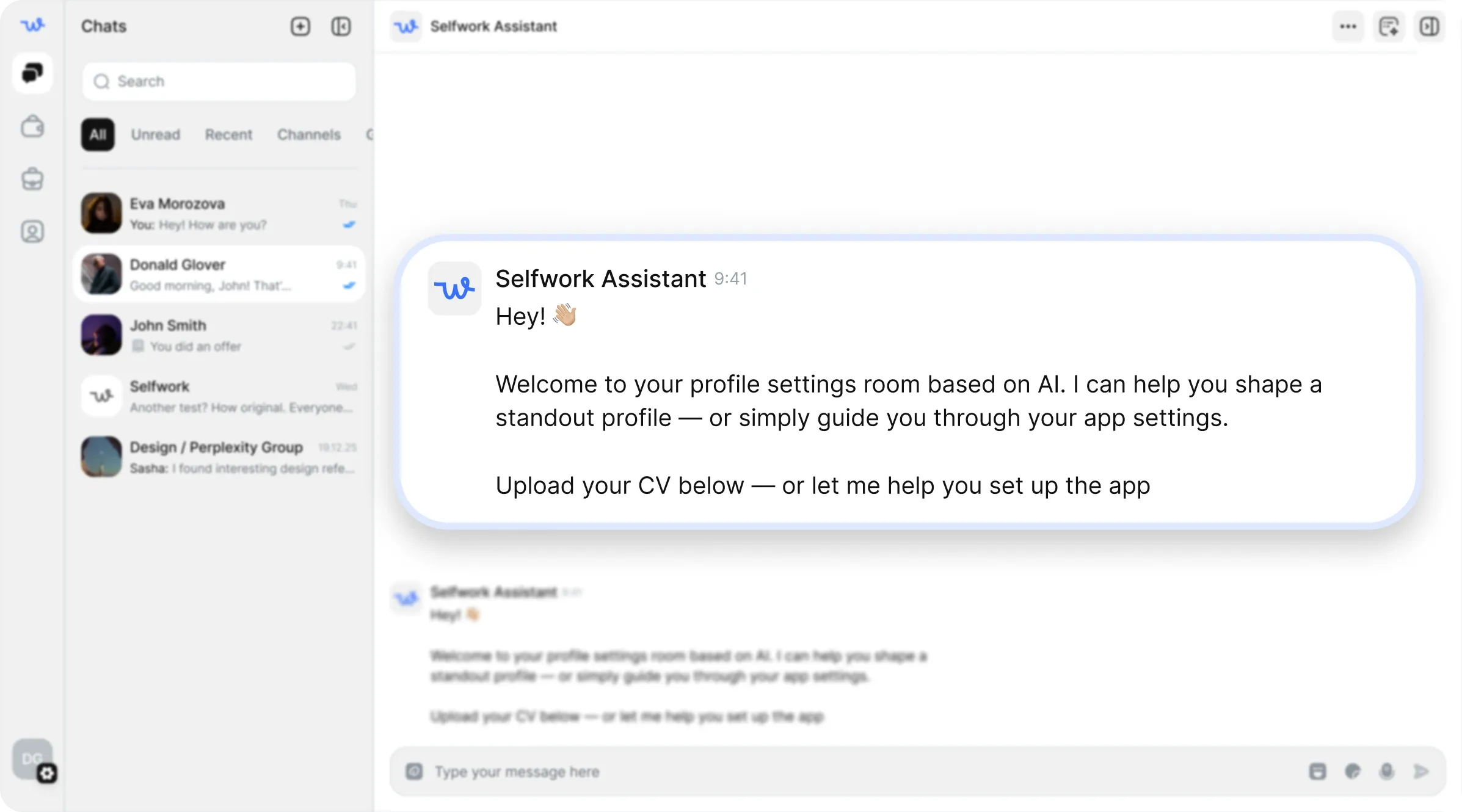
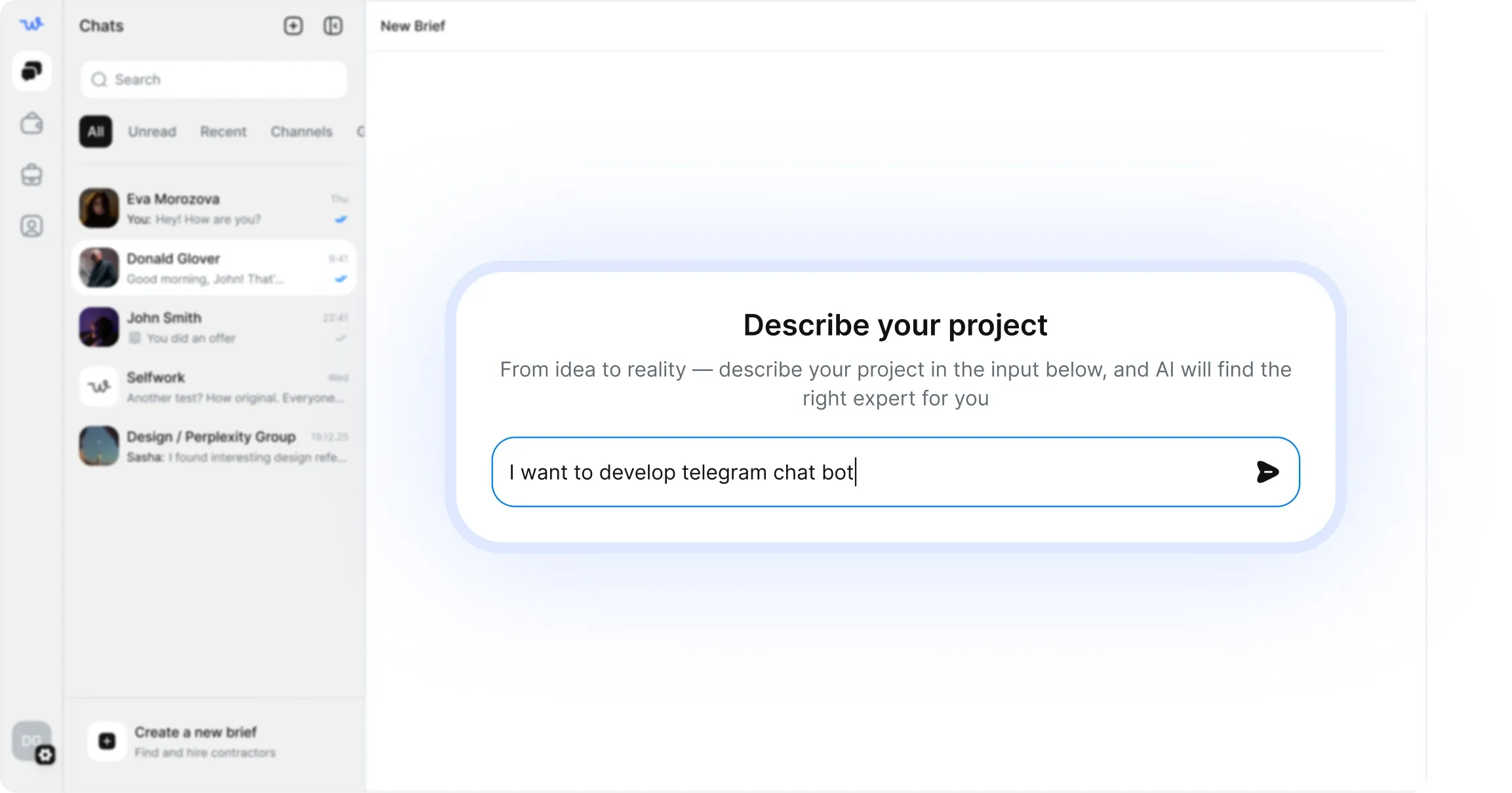
Publish the brief
Tell us what the backend system needs to do, which stack you use, and what success looks like.
Review matching specialists
Compare freelance backend engineers by experience, fit, availability, and evidence of similar work.
Shortlist and align
Confirm scope, estimate, delivery milestones, communication cadence, and handoff requirements.
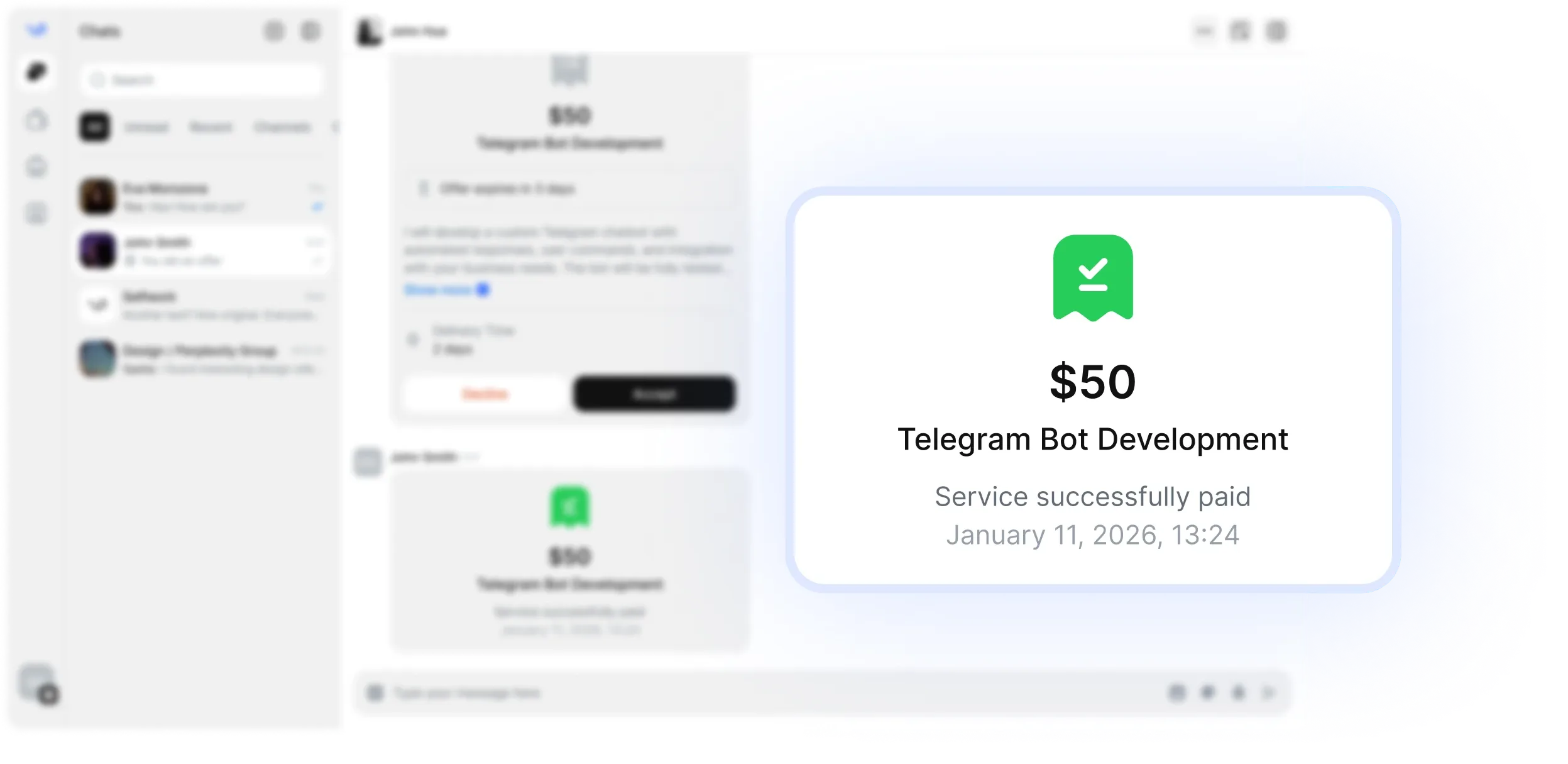
Fund the work safely
Use escrow so the engineer can start confidently while you keep payment tied to agreed deliverables.
Common brief mistakes
Many backend projects slow down because the brief is too vague. Avoid these mistakes when you hire backend engineers:
- Listing a language without the use-case — “Need Python” is not enough if the job is actually API design, ETL, or infrastructure automation.
- Skipping system context — include whether the work touches a monolith, microservices, a serverless app, or a legacy database.
- Ignoring load and reliability — mention traffic levels, latency targets, uptime expectations, and failure tolerance.
- Leaving out integration details — state the external systems, auth methods, webhooks, and data formats involved.
- No definition of done — specify tests, documentation, deployment, and acceptance criteria.
- Mixing architecture and production support without priority — if the engineer needs to both build and rescue, say which matters first.
A good brief helps freelance backend engineers estimate accurately and prevents scope creep later.
Verification and escrow
Selfwork is designed to reduce risk when you hire backend engineers remotely. Verified profiles help you evaluate experience faster, and escrow helps protect both sides during delivery.
Verification gives you more confidence that the engineer has a relevant background, while escrow ensures funds are held securely until the agreed milestone is completed. That is especially useful for backend projects where deliverables may involve sensitive systems, deployment access, or production data.
For higher-stakes backend work, ask for:
- links to similar API or infrastructure projects
- notes on performance improvements, scale, or downtime reduction
- documentation examples or architecture diagrams
- a clear handoff process for code, tests, secrets, and deployment steps
FAQ
How do I hire backend engineers for a small API task?
Share the endpoint spec, request/response examples, auth rules, database changes, and deadline. Small tasks are easiest when the scope is narrowly defined.
Can I hire backend engineers for cloud and DevOps work too?
Yes. Many backend engineers also handle deployment pipelines, containers, infrastructure as code, monitoring, and release automation.
What stack should I choose when I hire backend engineers?
Choose the stack that best matches your current system and team. The best engineer is often the one who can safely extend what you already run.
How much input should I include in the brief?
Enough to make the work estimable: system context, stack, integrations, traffic assumptions, timeline, and success criteria.
Can remote backend engineers work with an existing team?
Yes. Remote engineers often join sprint-based workflows, review pull requests, document changes, and collaborate through Slack, Jira, GitHub, or Linear.