Pricing for AI developers
AI developer pricing depends on complexity, data readiness, and whether you need product work, model integration, or full-stack implementation. Prototype work is usually faster to scope, while production systems require more testing, monitoring, and security review.
| Engagement type |
Typical use case |
Pricing model |
Expected effort |
| Discovery / technical scoping |
Define architecture, model choice, data flow, and risks |
Fixed fee |
1–3 days |
| Prototype / proof of concept |
Demo chatbot, AI assistant, or simple automation |
Fixed fee or hourly |
3–10 days |
| MVP build |
RAG app, agent workflow, or custom AI feature in a product |
Milestone-based |
2–6 weeks |
| Production integration |
Secure, monitored AI feature with tests and deployment |
Milestone-based or hourly |
4+ weeks |
| Ongoing optimization |
Prompt tuning, evaluation, quality improvement, cost control |
Monthly retainer |
Ongoing |
Your budget should reflect the amount of product thinking involved. A developer who only needs to wire up a single API call will cost less than one building a searchable knowledge system with ingestion, retrieval, evaluation, and fallbacks.
Formats and use cases
Different AI projects need different engagement formats. Choosing the right one helps you hire AI developers efficiently and keep the scope under control.
- Prototype build: Best for founders validating an idea, teams pitching investors, or product managers testing whether an AI experience is useful before investing in full engineering.
- MVP implementation: Ideal when you need a working feature inside a web app, SaaS platform, or internal tool. This often includes authentication, usage limits, logging, and a basic admin interface.
- Feature extension: Good for teams that already have a product and need an AI layer added to an existing stack such as React, Next.js, Node.js, or Python.
- Automation project: Suited to document processing, lead qualification, support triage, content workflows, CRM enrichment, or reporting tasks.
- Consulting and architecture: Useful if your team needs help choosing between OpenAI, open-source models, retrieval infrastructure, vector databases, or deployment options.
- Fractional AI engineering: Helpful when you need a remote AI developer to improve prompts, test responses, refine prompts, or support internal teams over time.
Common use cases include:
- AI chatbots for support or sales
- Knowledge-base search with retrieval-augmented generation
- Agent workflows that call tools and APIs
- Document summarization and extraction
- Internal copilots for ops, legal, HR, or finance
- Personalization, recommendations, and ranking support
- Content generation with guardrails and approvals
How to hire AI developers on Selfwork
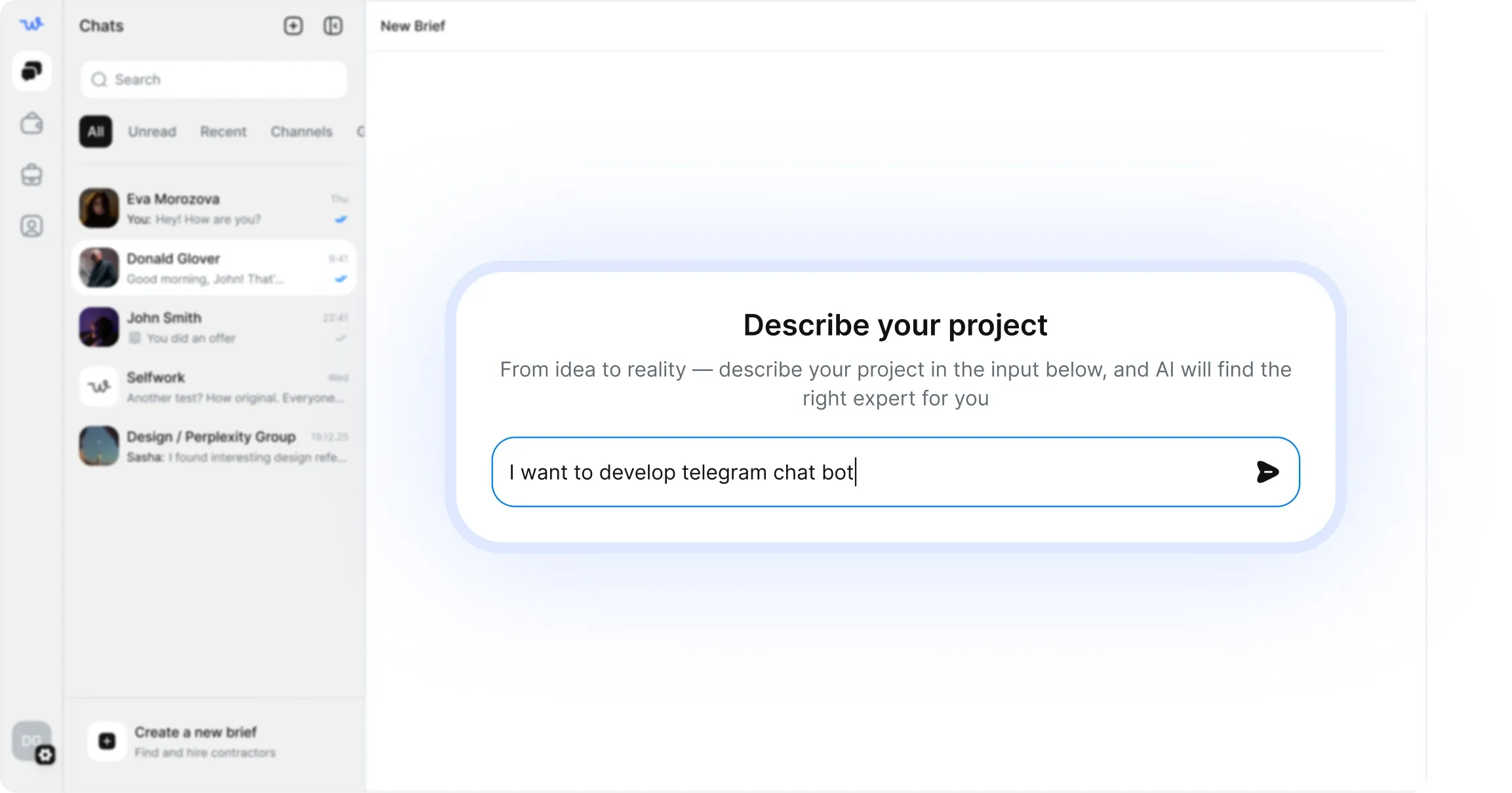
Publish a clear brief
Describe your product, user type, data sources, desired outputs, constraints, and deadline. Include whether you need a prototype, MVP, or production rollout.
Review relevant specialists
Compare freelance AI developers based on skills, verified profiles, recent work, and fit for your stack. Look for experience with LLM apps, embeddings, evaluation, and deployment.
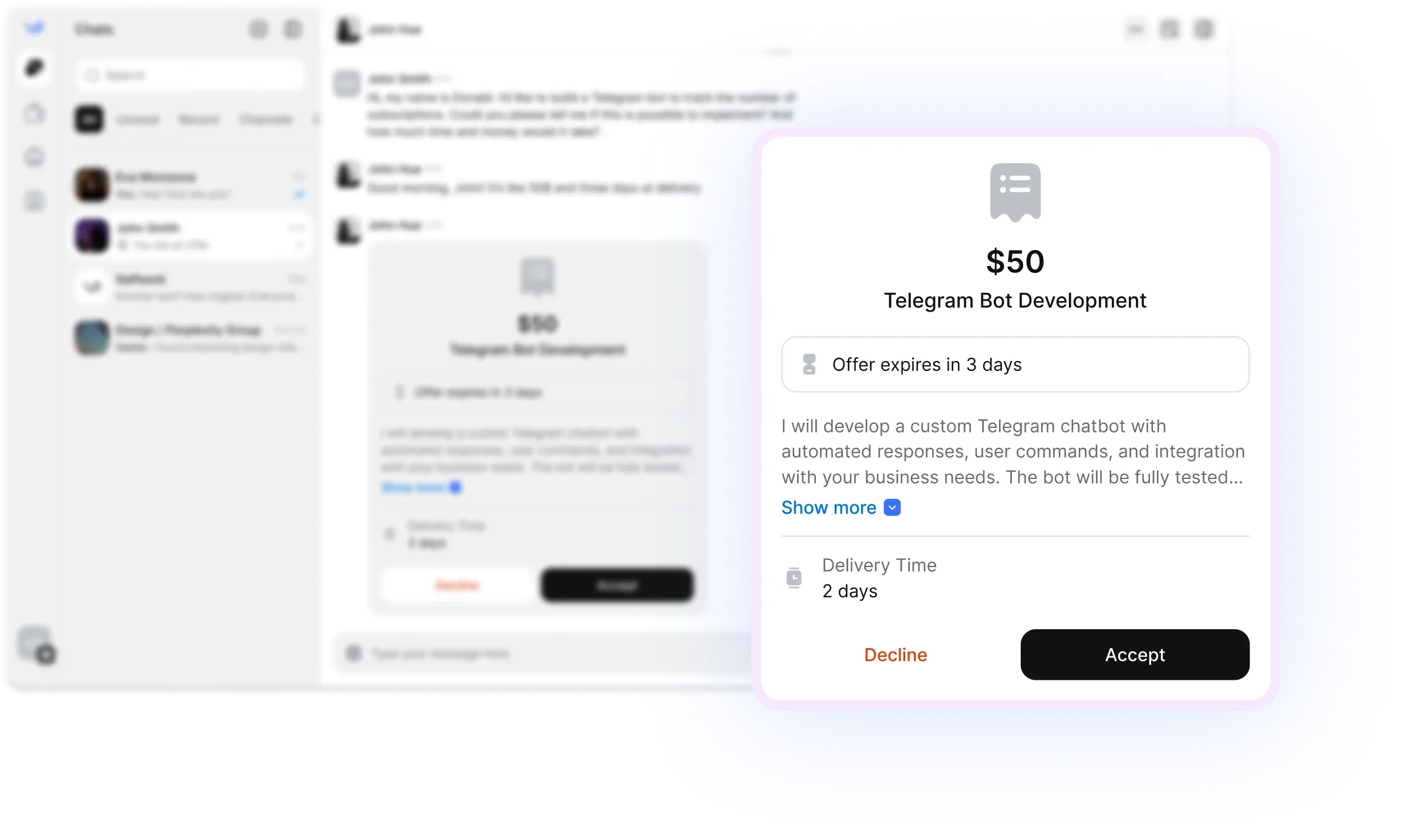
Agree on milestones
Break the work into visible stages such as discovery, build, testing, and release. This keeps the project moving and makes it easier to review progress.
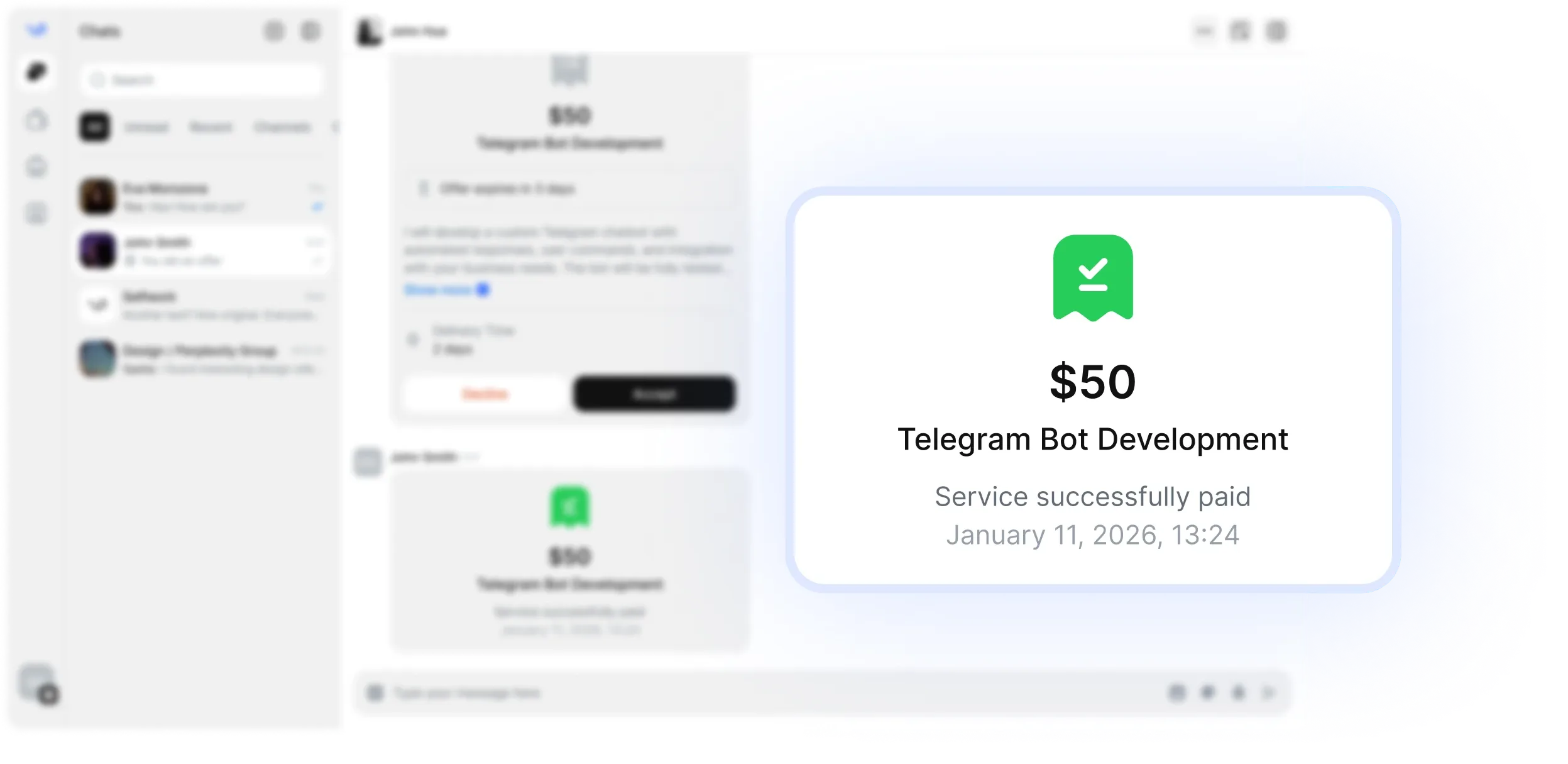
Fund escrow and start work
Once you choose a developer, your funds stay protected while the work is delivered against the agreed brief. That creates a safer way to hire remote AI developers without losing control of the project.
Common brief mistakes to avoid
AI projects fail most often because the brief is too abstract. Avoid these mistakes when you hire AI developers:
- Vague goals: “Build an AI app” is not enough. Specify the problem, the users, and the action the AI should take.
- No source data plan: A developer needs to know where the content, documents, or events come from.
- No output format: Explain whether you need text, tags, structured JSON, citations, or UI actions.
- Ignoring edge cases: Clarify what happens when the model has low confidence, missing data, or unsafe input.
- No success metric: Define accuracy, response time, cost, adoption, conversion, or support deflection targets.
- Underestimating QA: AI features need testing, evals, and fallbacks before they are safe to launch.
A good brief gives a freelance AI developer enough detail to estimate the work properly and choose the right architecture.
Verification and escrow
Selfwork is designed to reduce the risk of hiring remote AI developers. Verified specialist profiles help you identify people with relevant experience, and escrow keeps payment tied to the agreed delivery process. That matters on AI projects, where the difference between a useful feature and an expensive experiment often comes down to execution discipline.
Use verification to screen for practical experience with model APIs, prompts, retrieval, testing, and integration work. Use escrow to protect milestones and keep progress visible. For larger builds, ask for staged delivery so you can validate the architecture before the entire budget is released.
FAQ
How much does it cost to hire AI developers?
Costs vary by scope, but simple prototypes are usually cheaper than production features with retrieval, logging, security, and evaluation. Milestone-based pricing is common for larger builds.
What should I include in my AI developer brief?
Include the user problem, data sources, target platform, preferred stack, output format, success metrics, timeline, and whether you need a demo, MVP, or full deployment.
Can freelance AI developers build production systems, not just demos?
Yes. The best freelance AI developers can build secure, testable systems with monitoring, fallbacks, and integration into your existing product or workflows.
Do I need a remote AI developer or a full team?
If your scope is focused, a strong remote AI developer can handle architecture and implementation. Larger platforms may need support from frontend, backend, and DevOps specialists too.
What tools do AI developers usually use?
Common tools include Python, TypeScript, OpenAI API, LangChain, Hugging Face, FastAPI, Node.js, vector databases, and cloud deployment tooling, depending on the project.